Why Do You Need PhishNext? [2026 Updated]
Your employees are either your biggest weakness or your best line of defense in a time when 93% of data breaches start with a single spear-phishing email. For more than ten years, click rates have not decreased with traditional annual training.
Craw Security's automated, AI-powered PhishNext solution addresses the "Human Risk Gap" and transforms your employees into a "Human Firewall."
What is the product? (PhishNext)
Craw Security created the "Closed-Loop Human Risk Platform" PhishNext to offer automated, lifelike phishing simulations. This AI-powered solution turns workers from possible weak points into a "Human Firewall" by mimicking actual phishing attempts and offering instantaneous, quantifiable behavior modification via automated training.
Features
The following are the features of PhishNext:
● Fully Automated Lifecycle: From campaign execution and real-time tracking to quick tenant provisioning and employee directory synchronization.
● Nation-State-Grade Campaign Builder: Enables the development of complex, lifelike simulations that imitate popular websites by using the same domains.
● AI-Driven Template Selection: To automatically send the best email templates, an AI algorithm examines user history and behavior.
● Interactive Interaction Tracking: Keeps an eye on reaction rates, data uploads, and clicks in real time.
● Multi-Channel Simulation: Ability to mimic not only email phishing but also Smishing (SMS), Vishing (Voice), and QR-based phishing.
● Automatic Remediation: If a worker "fails" at a link, they are instantly given videos, quizzes, and microlearning modules.
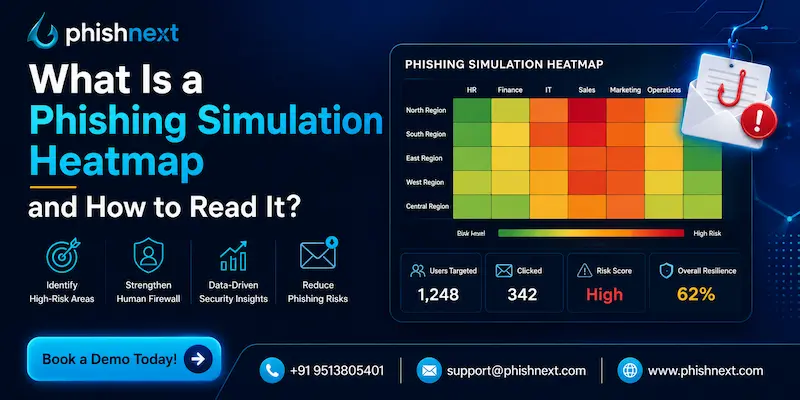
● Executive Dashboard: Offers consistent reporting on "phish-prone" rates, course completion, and total risk reduction.
Benefits
The following are the benefits of PhishNext:
● Risk Reduction: Regular training reduces "phish-prone" rates by over 80%.
● Behavioral Change: Goes beyond yearly compliance training to bring about quantifiable improvements in the way staff members respond to questionable communications.
● Resource Efficiency: Spreadsheets, intricate procedures, and manual follow-ups are all eliminated with 100% automation.
● Improved Reporting Rates: Helps the security team prevent attacks that get past technical filters by encouraging staff members to report actual risks.
Users
The following are some of the users of PhishNext:
● Security Teams/ IT Admins: Who must control human risk without incurring high administrative costs.
● Executives/ C-Suite: Who need high-level metrics on ROI and organizational risk.
● All Employees: Phishing attempts target everyone from entry-level employees to high management.
Industries that need it
Any organization dealing with sensitive data or financial transactions requires these simulations, specifically:
● Healthcare (Hospitals): High-risk targets with significantly lower click-through rates demonstrated by simulations.
● Finance & Fintech: Often targeted for wire transfers and credential harvesting.
● E-commerce & Edutech: Sectors with significant levels of digital contact and huge client databases.
● Government & Enterprises: Organizations that are required to adhere to regulations such as ISO 27001, GDPR, and HIPAA.
Why Do You Need it?
You need PhishNext for the following reasons:
● The Human Risk Gap: Phishing still accounts for 93% of breaches, and conventional yearly training has been ineffective in lowering click-through rates for more than ten years.
● High Breach Costs: An average data breach will cost about $4.88 million.
● Technical Limits: The ability of contemporary phishing assaults to get past Secure Email Gateways (SEGs) is growing. The "human layer" is trained by PhishNext to detect what technology overlooks.
Where to get it?
You can access and purchase the service through the Craw Security website at phishnext.com.
Future of this product?
The future of PhishNext and similar platforms lies in Adaptive AI and Human Risk Management (HRM):
● Autonomous Learning: Advancing toward "zero-touch" systems, in which AI agents dynamically modify simulation difficulty based on a user's proficiency level.
● Generative AI Payloads: Creating context-aware, hyper-personalized attacks that imitate real-time threats by using AI to examine an organization's digital footprint.
● Deepfake Integration: Extending into deepfake video and speech simulations to get staff ready for the upcoming social engineering wave.
● Behavior-Based Metrics: Switching from straightforward "click rates" to a single "Human Risk Number" that offers a security posture assessment in real time.
Helpful Resources
- Phishing on Messaging Apps: How Attackers Use Teams, WhatsApp, SMS, and Slack?
- How to Identify a Phishing Website? | PhishNext
- Top 10 Best Phishing Simulation Tools In 2026
- How to Identify Fake Websites: A Beginner’s Guide to URL Safety
- Corporate Phishing Simulation Solutions in India
- The Hospitality Frontline: Managing Hotel Cybersecurity in the Age of ClickFix
- Ransomware Infection Incident Disclosed by Washington Hotel in Japan
- What Is Phishing Simulation? Complete Guide for Businesses
- Phishing Scam Targets India AI Impact Summit Attendees: Urgent Security Advisory
- AI and Vishing Social Engineering Risks Aiming Businesses