What Is a Watering Hole Attack and How Does It Work?
Do you know what Watering Hole Attacks are and how you can protect yourself against such attacks? If not, then you are at the right place. Here, we will talk about Watering Hole Attacks and related prevention techniques in detail.
Moreover, we will introduce you to a reliable phishing simulation platform offered by a reputable VAPT service provider. What are we waiting for? Let’s get started!
What Is a Watering Hole Attack?
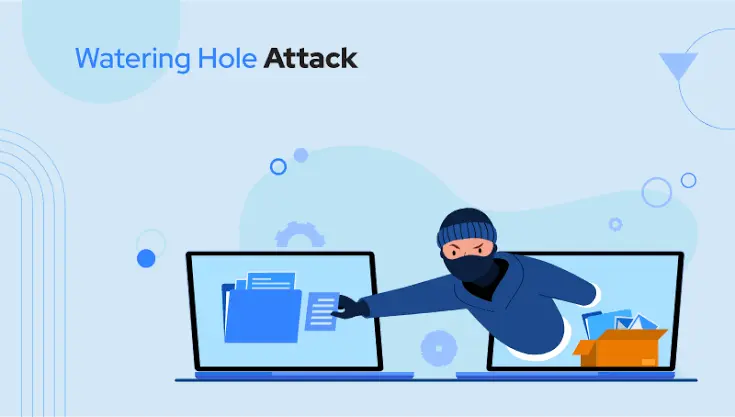
A watering hole attack is a precise cyber assault in which a hacker breaches a legitimate website that a certain group, organization, or industry frequents, often targeting it specifically. The attacker inserts malicious code or malware into this trusted site and waits for their intended victims to visit.
Upon arrival, their devices are automatically infected. By taking advantage of the built-in trust that users have for well-known, routine web portals, this tactic enables cybercriminals to circumvent conventional network boundaries. Let’s take a look at what Watering Hole Attacks are and how to prevent such attacks!
Why Is It Called a Watering Hole Attack?
It is called a watering hole attack for the following reasons:
1. Inspired by Natural Predators: Imitates feral hunters lying in wait at aquatic locales for victims to show up rather than pursuing them.
2. The "Watering Hole" (The Website): Serves as a well-known, reliable industry website that the target audience frequents on a regular basis.
3. The "Prey" (The Target Audience): Denotes the particular cohort of staff or users that the cybercriminal aims to target.
4. Exploiting Necessity and Trust: Takes advantage of the targets' habitual necessity to go to these particular locations, thereby reducing their security guard.
5. "Poisoning the Well": Describes the direct insertion of malicious software into a website that is considered reliable, with the result that anyone who accesses the site will be infected automatically.
What Are the Different Stages of a Watering Hole Attack?
The following are the different stages of a watering hole attack:
● Target Identification and Reconnaissance: Investigate and determine the online surfing behaviors of the defined target audience.
● Website Selection and Vulnerability Analysis: Select a reliable website that you visit often and check it for unaddressed security vulnerabilities.
● Website Compromise ("Poisoning the Well"): Breaks into the selected website to insert harmful redirection scripts or covert exploit kits.
● Waiting and Execution (Infection): Awaits the targets' arrival at the breached website and delivers malware to their devices automatically.
● Network Infiltration and Lateral Movement: Utilizes the newly compromised device to gain access to the target's corporate network and extract data.
How Is a Watering Hole Attack Different from Phishing and Drive-By Downloads?
|
S.No. |
Topics |
Factors |
What? |
|
1. |
Watering Hole Attacks vs. Phishing |
Passive vs. Active Delivery |
Watering hole attacks are characterized by passivity, as they wait for the victim to access a compromised site. Phishing operates by dispatching direct and misleading messages (such as emails or texts) to entice targets into behaving. |
|
Trust Exploitation |
Watering hole attacks take advantage of the user's established trust in a legitimate and often-visited website. Phishing uses social engineering to impersonate trusted brands, individuals, or institutions. |
||
|
2. |
Watering Hole Attacks vs. Drive-By Downloads |
Audience Targeting |
Watering hole attacks represent highly focused campaigns directed at a particular group, organization, or industry. Drive-by downloads usually take advantage of chance occurrences, aiming at any random user who arrives at a compromised webpage. |
|
Role in the Attack |
A watering hole is a particular tactic employed to draw in a targeted victim. A drive-by download is the actual method (automatically downloading malware without user interaction) frequently employed to carry out that strategy. |
How Do Cybercriminals Choose Their Targets?
Cybercriminals choose their targets in the following ways:
a) Scanning for Low-Hanging Fruit (Vulnerability Assessments): Utilize automated scanners to find unpatched software and system vulnerabilities that are easy to exploit.
b) Assessing the Value of Stored Data: Focus on networks that possess very valuable intellectual property, confidential business information, or personal identities.
c) Evaluating Financial Payoff (Ransomware Likeliness): Concentrate on vital sectors that cannot bear downtime and are very likely to pay ransoms.
d) Exploiting Weak Human Links (Social Engineering): Search for organizations whose employees lack training and are likely to click on harmful links or divulge credentials.
e) Leveraging Supply Chain and Vendor Connections: Compromise smaller, less secure third-party vendors to obtain backdoor access to larger corporate targets.
What Are the Common Techniques Used in Watering Hole Attacks?
The following are the common techniques used in watering hole attacks:
1. Drive-By Downloads: Download and execute malware on the victim's device automatically and stealthily, without the need for clicks or any user interaction.
2. Cross-Site Scripting (XSS): Directly inserting harmful scripts into the web pages of a trusted site to aim at and take advantage of the browsers of users who visit the site.
3. Malicious Redirections: Employing modified code or concealed iFrames to covertly reroute unwitting users from the authorized website to an exploit server managed by the attacker.
4. SQL Injection (SQLi): Utilizing weaknesses in the backend database to take over the website’s admin controls and embed harmful payloads in its content.
5. Browser and Plugin Exploitation: Examining the visitor’s device for unpatched vulnerabilities in their web browser or extensions to obtain unauthorized access to the system.
The Role of AI in Modern Watering Hole Exploits
|
S.No. |
Roles |
What? |
|
1. |
Automated Reconnaissance and Profiling |
Examines online traces and traffic trends to quickly chart the preferred websites of the target audience. |
|
2. |
Hyper-Targeted Dynamic Delivery |
Malicious payloads are deployed only upon detection of specific matching target IP ranges or browser profiles. |
|
3. |
Automated Vulnerability Discovery |
Employs AI scanners to immediately find zero-days and exploitable security vulnerabilities on the host website. |
|
4. |
Polymorphic Malware Generation |
Continuously alters malware code in real time to avoid detection by signature-based endpoint defenses. |
|
5. |
Intelligent Supply Chain Pivot |
Charts business ecosystems to identify the most vulnerable, reliable third-party sites to take advantage of. |
Which Industries Are Most Vulnerable to Watering Hole Attacks?
The following industries are most vulnerable to watering hole attacks:
● Government and Defense Sectors: Focus on state secrets, military strategies, and intelligence resources through websites of interest groups that are highly restricted.
● Financial Services and Banking: Focus on proprietary market algorithms, sensitive customer banking data, and high-value financial transactions.
● Healthcare and Pharmaceuticals: Patented designs, clinical research data, and medical records of great value.
● Energy and Critical Infrastructure: Aim at industrial control systems and operational technology to interfere with power grids or water systems.
● Technology and Software Development: Focus on source code, developer credentials, and software update mechanisms to initiate downstream supply chain attacks.
What Are Some Real-World Examples of Watering Hole Attacks?
The following are some real-world examples of watering hole attacks:
a) The US Council on Foreign Relations (2012): Utilized a zero-day vulnerability in Internet Explorer on the CFR website to aim at experts in defense and foreign policy.
b) The Polish Financial Supervision Authority (2016): Gained control of the regulator's website to distribute malware targeting the compromise of global banking institutions.
c) Hong Kong Pro-Democracy Media Attacks (2021): Utilized iOS zero-day vulnerabilities on local news sites to covertly install spyware on visitors' iPhones.
The Impact and Consequences of a Successful Attack
|
S.No. |
Roles |
What? |
|
1. |
Severe Data Breaches and IP Theft |
Result in the loss of proprietary research, confidential corporate data, and highly valuable intellectual property. |
|
2. |
Widespread Internal Network Infiltration |
Gives assailants a lasting foothold within the internal network to compromise further systems and user accounts. |
|
3. |
Massive Financial Losses |
Incur huge expenses related to emergency incident response, legal penalties, regulatory fines, and system remediation efforts. |
|
4. |
Erosion of Customer and Partner Trust |
Ruinous for the brand’s long-term reputation and harmful to vital business connections because of perceived negligence regarding security. |
|
5. |
Disruption of Critical Business Operations |
Results in major system downtime, which stops production, customer service, and daily operations while recovery occurs. |
How Can Organizations Prevent Watering Hole Attacks?
Organizations can prevent watering hole attacks in the following ways:
1. Implement Robust Endpoint Detection and Response (EDR): Identifies and prevents the execution of malicious software obtained from compromised websites.
2. Enforce Strict Web Filtering and Secure Web Gateways (SWG): Precludes employees from reaching known harmful or compromised external domains.
3. Keep Browsers and Software Consistently Patched: Shut down the browser vulnerabilities that attackers use to execute harmful code.
4. Adopt Zero Trust Network Access (ZTNA): Limit access rights to avert lateral movement of compromised devices.
5. Leverage Threat Intelligence and Domain Monitoring: Recognize and prevent access to industry websites that have recently been compromised, prior to employee visits.
What Security Tools Help Defend Against Watering Hole Attacks?
The following security tools help defend against watering hole attacks:
● Remote Browser Isolation (RBI): All browsing sessions are executed within a secure cloud container, which completely isolates the user's local device from harmful web code.
● Secure Web Gateways (SWG): Filters outgoing web traffic in real time to prevent users from reaching known compromised or harmful domains.
● Endpoint Detection and Response (EDR): Continuously observes devices to immediately identify and eliminate covert malware payloads delivered from compromised websites.
● Vulnerability and Patch Management Software: Automates the updating of operating systems and browsers, thereby closing security vulnerabilities that drive-by downloads exploit.
● Threat Intelligence Platforms (TIP): Collect and provide real-time telemetry on newly compromised industry portals to prevent access before an incident happens.
Best Practices to Reduce the Risk of Watering Hole Attacks
|
S.No. |
Roles |
What? |
|
1. |
Enforce Zero Trust Network Access (ZTNA) |
Continuously limit access privileges to prevent a single compromised device from easily moving laterally across the network. |
|
2. |
Deploy Remote Browser Isolation (RBI) |
Conducts web sessions in a sandboxed cloud container, ensuring that active web threats are completely kept away from the user's physical endpoint. |
|
3. |
Maintain Strict, Automated Patch Management |
Immediately update browsers, operating systems, and plugins to eliminate the vulnerabilities that exploit kits rely on. |
|
4. |
Utilize Advanced Web Filtering and Gateways |
Monitors outgoing traffic in real time to block connections to compromised infrastructure or unapproved external servers. |
|
5. |
Conduct Context-Aware Threat Hunting |
Conduct proactive searches of internal system logs for irregularities or unforeseen links to external industry portals that suggest a breach. |
Incident Response: What to Do If You Are Compromised?
You should do the following tasks if you are compromised:
a) Isolate the Affected Endpoint Immediately: To stop active data exfiltration and contain malware, disconnect the compromised device from the network.
b) Initiate Forensic RAM and Log Capture: To assist the investigation, preserve volatile memory and system logs before any changes occur.
c) Block the Compromised Source Domain Network-Wide: Update proxies and firewalls to stop other users from accessing the host site.
d) Perform Targeted Active Directory Credential Resets: To prevent unauthorized access, cancel and reset the credentials linked to the compromised user.
e) Scan Network Logs for Lateral Movement: Examine traffic trends to identify additional systems to which the attacker may have shifted.
Conclusion: Stay Protected Against Watering Hole Attacks
Now that we have talked about what Watering Hole Attacks are, you might want to get a dedicated security solution to evade such attempts. For that, you can go for PhishNext, a dedicated phishing simulation platform offered by Craw Security.
PhishNext can help users to get used to such attacks and learn the ways to defend themselves against such attacks with ease. What are you waiting for? Contact, Now!
Frequently Asked Questions
About Watering Hole Attacks
1. What is a watering hole attack in cybersecurity?
A watering hole attack is a focused cyber assault in which a hacker infiltrates a legitimate site that is often visited to ensure that the devices of a certain group of users are infected automatically when they arrive.
2. How does a watering hole attack work?
A watering hole attack works in the following ways:
a) Target Profiling,
b) Website Compromise,
c) Payload Injection,
d) Stealthy Execution, and
e) Network Infiltration.
3. Why is it called a watering hole attack?
It is called a watering hole attack for the following reasons:
a) Natural Analogy,
b) The Watering Hole,
c) The Cyber Equivalent,
d) Patient Ambush, and
e) Guaranteed Contact.
4. How is a watering hole attack different from a phishing attack?
A watering hole attack is passive in nature, as it relies on victims to visit a compromised site they already trust, in contrast to active phishing, which involves sending misleading messages directly to targets.
5. Who is most at risk of a watering hole attack?
The following individuals are the most at risk of a watering hole risk:
a) High-Value Defense and Government Contractors,
b) Financial and Banking Institutions,
c) Critical Infrastructure and Energy Providers,
d) Technology and Software Developers, and
e) Specific Interest and Political Groups.
6. What are the common signs of a watering hole attack?
The following are the common signs of a watering hole attack:
a) Unexpected Redirects,
b) Unusual Endpoint Activity,
c) Sudden Browser Crashing or Lag,
d) Anomalous Network Traffic, and
e) Security Alerts on Host Sites.
7. Can antivirus software detect watering hole attacks?
Although conventional signature-based antivirus solutions frequently overlook the initial exploit, contemporary behavioral antivirus solutions can identify and prevent the execution of the subsequent payload on the endpoint.
8. How can organizations prevent watering hole attacks?
Organizations can prevent watering hole attacks in the following ways:
a) Deploy Remote Browser Isolation (RBI),
b) Enforce Zero Trust Network Access (ZTNA),
c) Maintain Automated Browser and Patch Management,
d) Utilize Advanced Web Filtering and Gateways, and
e) Leverage Threat Intelligence and Domain Monitoring.
9. What security tools help detect and stop watering hole attacks?
The following security tools help detect and stop watering hole attacks:
a) Remote Browser Isolation (RBI),
b) Endpoint Detection and Response (EDR),
c) Secure Web Gateways (SWG),
d) Vulnerability and Patch Management Systems, and
e) SIEM and Network Behavior Analytics.
10. What should you do if your organization is affected by a watering hole attack?
You should do the following tasks if your organization is affected by a watering hole attack:
a) Isolate Compromised Endpoints Immediately,
b) Block the Source Domain Network-Wide,
c) Initiate Forensic Capture,
d) Enforce Targeted Credential Resets, and
e) Scan for Lateral Movement.