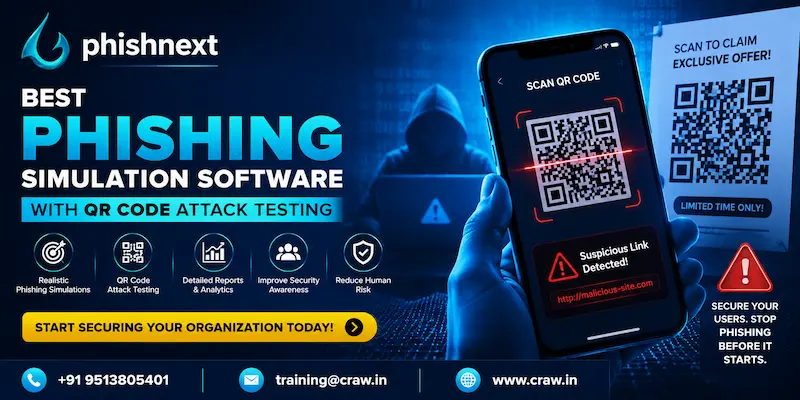
Best Phishing Simulation Software with QR Code Attack Testing
Do you know what Phishing Simulation Software is, and how it can help organizations to fight against phishing attacks for better security? If not, then you are at the right place. Here, we will talk about what phishing simulation software is and its related benefits in detail.
Moreover, we will introduce you to a reliable phishing simulation solution offered by a reputable VAPT service provider. What are we waiting for? Let’s get straight to the topic!
What Is Phishing Simulation Software?
Phishing simulation software is a training security tool that dispatches controlled, realistic imitation cyberattack emails to employees to safely assess their security awareness. It monitors real-time user actions, like who clicks on suspicious links or provides credentials, to pinpoint high-risk departments and offer targeted training.
This software bolsters an organization’s human firewall and mitigates the risk of successful breaches by training employees with real-life situations. Let’s take a look at what Phishing Simulation Software is and its related benefits for users!
What Is QR Code Phishing (Quishing)?
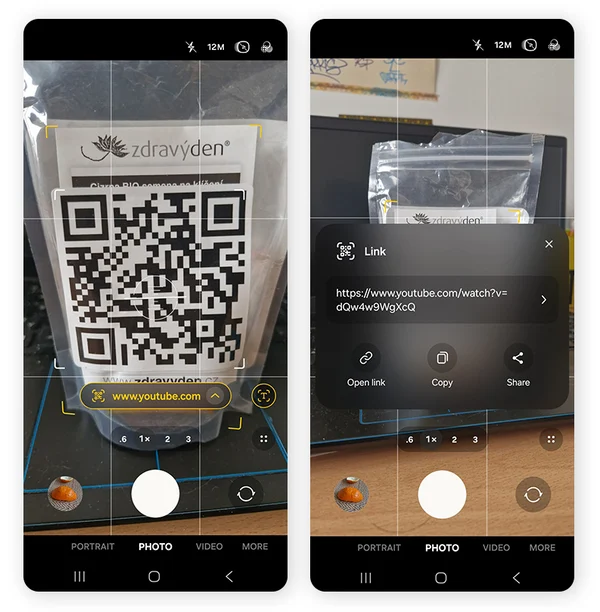
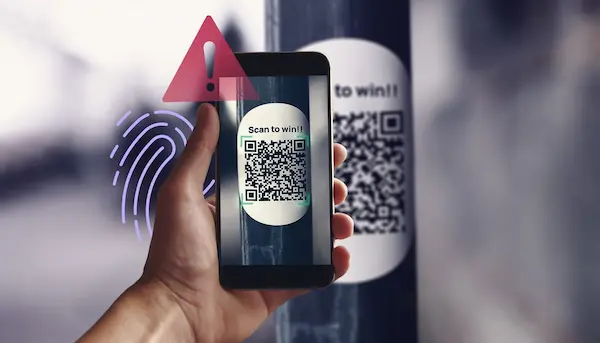
QR code phishing, also known as "quishing," involves social engineering tactics where attackers place harmful links within QR codes to evade standard email security measures. These codes, when scanned with a mobile device, send unwitting users to fake credential-harvesting sites or start covert malware downloads that jeopardize the network.
Why Is Quishing a Growing Cyber Threat?
Quishing a growing cyber threat for the following reasons:
1. Evasion of Email Security Filters: Malicious links are concealed within images in QR codes, allowing them to bypass text-based security scanners with ease.
2. Device Deflection and Security Blind Spots: Scanning transfers the threat to personal mobile devices that are not managed and do not have corporate endpoint protections.
3. Exploitation of High Consumer Trust: Due to the extensive daily use of QR codes, users become complacent and scan them without thinking twice.
4. Obfuscated and Hidden Destinations: It is impossible to visually identify scams, as users cannot preview the underlying URL before scanning.
5. Ease of Scale via Automation: Using automated tools, attackers can create unique QR codes in seconds at a low cost and establish dynamic links for them.
QR Code Phishing Simulation vs Traditional Email Phishing Simulation
|
S.No. |
Topics |
Factors |
What? |
|
1. |
Quishing |
Mobile-Centric Vulnerability Testing |
Assesses whether employees exercise caution when transferring a potential attack from a secure corporate workstation to a frequently unmanaged personal mobile device. |
|
Visual Obfuscation Awareness |
Assesses a user’s capability to confirm the destination URL after scanning the image on their phone, given that the harmful link cannot be hovered over or previewed in advance. |
||
|
2. |
Traditional Email Phishing Simulation |
Desktop-Based Link Scrutiny |
Concentrates on instructing staff to conduct manual checks of sender addresses, identify domain misspellings, and hover over hyperlinks in embedded text before clicking. |
|
Text and Context Analysis |
Assesses how capable the user is of spotting warning signs of social engineering and immediate psychological triggers in the email's text. |
Why Do Businesses Need QR Code Attack Testing in Security Awareness Training?
Businesses need QR code attack testing in security awareness training for the following reasons:
● Bypasses Traditional Email Filters: Educates users, as email scanners frequently overlook harmful links concealed within QR code images.
● Exploits the "Device Deflection" Blind Spot: Instructs staff to remain watchful when moving tasks from secure computers to mobile devices that lack management.
● Combats Blind Consumer Trust: Surmounts the cognitive bias that causes users to reflexively scan QR codes without checking their origin.
● Eliminates the "Hover Preview" Safety Net: Equips users to scrutinize destination URLs on their phones, as hover-previewing is not an option.
● Protects Against Multi-Factor Authentication (MFA) Fatigue: Precludes employees from scanning codes that are intended to pilfer session tokens and circumvent MFA protections.
How do QR Code Phishing Simulations Improve Employee Cybersecurity Awareness?
QR code phishing simulations improve employee cybersecurity awareness in the following ways:
a) Exposes the Visual Blind Spot: It educates employees to seek out concealed risks in image-based attachments, instead of depending solely on text-based alerts.
b) Conditions Mobile-First Diligence: It instructs users to examine destination URLs on their phones with great care before entering credentials or downloading files.
c) Breaks the Automatic "Scan Reflex": It interrupts the muscle memory associated with scanning public codes by incorporating a healthy skepticism into daily routines.
d) Highlights Device Deflection Risks: It shows how easily a threat can cross the divide from a secure corporate computer to an unmanaged personal device.
e) Reinforces Active Threat Reporting: It guarantees that personnel are aware of how to alert the security team to non-traditional, image-heavy attack vectors with the help of current reporting tools.
Industries That Benefit Most from QR Code Phishing Testing
|
S.No. |
Industries |
What? |
|
1. |
Financial Services and Banking |
Defends high-value transaction portals against quishing attacks aimed at credential harvesting and evading multi-factor authentication. |
|
2. |
Energy and Utilities |
Protects vital infrastructure by stopping assailants from exploiting mobile devices to gain unauthorized access to sensitive operational networks. |
|
3. |
Healthcare and Pharmaceuticals |
Protects patients' electronic health records and proprietary medical research from data breaches caused by unauthorized mobile scanning. |
|
4. |
Retail and E-Commerce |
Protects the supply chain and point-of-sale systems from counterfeit QR codes aimed at capturing consumer payments and corporate information. |
|
5. |
Technology and IT Services |
Averts the risk of developers and administrators unintentionally exposing source code or network access keys through harmful mobile redirects. |
Common QR Code Phishing Scenarios Used in Simulated Attacks
The following are some common QR code phishing scenarios used in simulated attacks:
1. The Fake MFA & Security Authentication Prompt: Imitates crucial IT alerts that put pressure on staff to check and confirm their identity again.
2. The Shared Document & HR Policy Notification: Utilizes time-sensitive company news, such as payroll or benefits, to deceive users into scanning.
3. Shared Office Space Physical Spoofing: Simulates printed desk flyers or Wi-Fi signs that aim to steal credentials in shared spaces.
Key Features to Look for in the Best Phishing Simulation Software
Following are some key features to look for in the best phishing simulation software:
● Multi-Channel & Next-Gen Attack Simulation: Evaluates contemporary dangers such as SMS, voice, and QR code assaults in addition to conventional email phishing.
● Dynamic, Real-World Template Libraries: Update templates regularly to ensure they align with current, real-world cyberthreat trends and scams.
● "Point-of-Failure" Micro-Learning (Teachable Moments): Provides employees with instant, bite-sized training the moment they click on a simulated test link.
● Automated Direct Email Delivery (DED): Uses API integrations to send simulation emails natively, thus avoiding external mail filters entirely.
● Behavior-Based Risk Scoring & Analytics: Records and monitors risk for individuals and departments over time, using real test performance as a basis.
Benefits of Using Phishing Simulation Software with QR Code Attack Testing
|
S.No. |
Benefits |
How? |
|
1. |
Closes the Email Gateway Blind Spot |
Educates users to detect image-based threats that have evaded conventional email filters. |
|
2. |
Secures the Mobile Endpoint Frontier |
Extends security awareness to the mobile level, safeguarding the gap between personal devices and corporate data. |
|
3. |
Eliminates Reflexive Scanning Habits |
Train employees to take a moment to confirm that a QR code is valid before scanning it. |
|
4. |
Strengthens MFA Defenses |
Instructs personnel in identifying and preventing advanced quishing assaults aimed at seizing active multi-factor session tokens. |
|
5. |
Provides Actionable Risk Analytics |
Provides clear and quantifiable metrics that track the vulnerability of your workforce to mobile-centric social engineering. |
Best Phishing Simulation Software with QR Code Attack Testing in 2026
Following are the best phishing simulation software with QR code attack testing in 2026:
a) PhishNext: Employs AI-powered delivery to replicate multi-phase, deeply individualized QR code assaults that resemble real-time credential-harvesting strategies.
b) Hoxhunt: Gamified and adaptive “quishing” simulations include dynamic QR-code email templates and printable QR stickers for testing hybrid office environments.
How to Launch a Successful QR Code Phishing Simulation Campaign?
You can launch a successful QR code phishing simulation campaign in the following ways:
1. Establish Baseline Whitelisting and Domain Testing: Initially, verify the delivery configurations to confirm that the simulated QR emails land in the employees’ inboxes and are not obstructed by IT filters.
2. Select Realistic, High-Context Scenarios: Select relatable workplace scenarios, such as HR benefit updates or IT password resets, to genuinely assess employee vigilance.
3. Track Multiple Failure Points Independently: To identify specific vulnerabilities, monitor and measure the initial image scan separately from the subsequent credential entry.
4. Deliver Instant "Point-of-Failure" Micro-Learning: To enhance retention, deliver immediate, small-scale training tips at the precise moment an employee does not pass a test.
5. Analyze Performance and Adjust Difficulty: As the security habits of the workforce improve, routinely examine failure rates and incrementally increase the complexity of the QR codes.
Future Trends in QR Code Phishing Simulation and Security Awareness Training
|
S.No. |
Trends |
What? |
|
1. |
Generative AI-Personalized Quishing |
AI generates personalized email pretexts and unique QR codes based on specific job roles. |
|
2. |
Hybrid "Phishing to Quishing" Multi-Vector Simulations |
Combines initial phishing emails with follow-up QR codes sent through text or chat to assess multi-step awareness. |
|
3. |
Physical Office Spoofing and "O2O" (Online-to-Offline) Tests |
To examine the behavior of a hybrid workforce, position printed QR codes in areas such as lobbies and breakrooms and use physical flyers. |
|
4. |
Deep Integration with Mobile Security & EDR |
Synchronizes simulation data with mobile threat defense tools to instantly isolate and monitor devices that do not pass tests. |
|
5. |
Adaptive Risk-Scoring and Dynamic Difficulty |
Customize and increase the complexity of QR tests according to real-time profiles of employee behavior. |
What is PhishNext?
Craw Security has developed PhishNext, a cutting-edge phishing simulation and security awareness training platform designed to evaluate, control, and diminish human cyber risk. Fueled by ThreatFusionAI threat intelligence, it provides highly realistic automated mock attacks like credential harvesting and QR-code phishing, along with immediate micro-learning at the point of failure.
Why PhishNext Is a Smart Choice for QR Code Phishing Simulation?
PhishNext is a smart choice for QR code phishing simulation for the following reasons:
● Addresses the Omni-Channel Threat Landscape: Trains users on modern, high-risk vectors such as QR codes (quishing) in addition to standard simulations of email, SMS, and voice.
● Exposes the Mobile Device Blind Spot: Simulates assaults in which users scan QR codes to transition from secure desktops to susceptible mobile browsers.
● Fueled by Real-Time Threat Intelligence: Utilizes Craw Security's extensive knowledge in VAPT and offensive security to mimic real-world attacker strategies.
● Provides Granular Multi-Stage Tracking: Independently observes individual activities, such as QR code scans, clicking links, and providing credentials.
● Delivers Instant, Behavior-Driven Micro-Learning: When a user fails a test, it automatically deploys target-specific "just-in-time" training lessons at that precise moment.
Benefits of PhishNext for Organizations
|
S.No. |
Benefits |
How? |
|
1. |
Threat-Aligned Simulations via ThreatFusionAI |
Utilizes real-time threat intelligence to guarantee that mock attacks accurately replicate the methods of actual, active-world attackers. |
|
2. |
Instant Point-of-Failure Learning |
Provides instant, context-aware feedback and brief lessons at the exact moment an employee succumbs to a simulated threat. |
|
3. |
Granular Multi-Stage Analytics |
Monitors and assesses user behavior throughout various stages, including message openings, code scans, and credential entries. |
|
4. |
Browser Detection & Response (BDR) |
Provides protection directly within the browser session to oversee online activities and prevent real-time credential theft. |
|
5. |
Scalable, Pay-Per-User Costing |
Provides pricing structures that are flexible and adjust dynamically to accommodate the growth of the organization and changes in team sizes. |
Conclusion
Now that we have talked about what Phishing Simulation Software is, you might want to get your hands on a dedicated phishing simulation solution from a reliable source. For that, you can go for PhishNext, a dedicated phishing simulation platform offered by Craw Security.
PhishNext can help users to learn more about how various types of phishing attacks work and see what they can do to evade such attacks. Thus, you will be able to get secured against unknown phishing attacks. What are you waiting for? Contact, Now!
Frequently Asked Questions
About Phishing Simulation Software
1. What is phishing simulation software with QR code attack testing?
This platform provides cybersecurity training by simulating realistic QR-code (quishing) attacks to help employees learn how to recognize and evade image-based mobile threats.
2. How does QR code phishing (quishing) simulation work?
QR code phishing simulation works in the following ways:
a) Crafting and Delivering the Decoy,
b) The Mobile Redirect,
c) Hosting the Safe landing Page,
d) Tracking User Actions, and
e) Triggering Teachable Moments.
3. Why is QR code phishing becoming more common in cyberattacks?
QR code phishing is becoming more common in cyberattacks for the following reasons:
a) Bypasses Security Filters,
b) "Device Deflection",
c) Obscures Destination URLs,
d) High User Trust and Reflexive Scanning, and
e) Effective Credential and MFA Harvesting.
4. What features should I look for in phishing simulation software?
You should look for the following features in phishing simulation software:
a) Diverse Multi-Vector Lures,
b) Just-in-Time Micro-Learning,
c) Behavior-Based Risk Scoring,
d) One-Click Reporting Integrations, and
e) Generative AI & Dynamic Customization.
5. How often should organizations conduct QR code phishing simulation campaigns?
To maintain security awareness without leading to employee fatigue, organizations should carry out QR code phishing simulations on a monthly or quarterly basis.
6. Which industries benefit the most from QR code phishing attack testing?
The following industries benefit the most from QR code phishing attack testing:
a) Financial Services and Banking,
b) Energy and Utilities,
c) Healthcare and Pharmaceuticals,
d) Retail and E-Commerce, and
e) Technology and IT Services.
7. Can QR code phishing simulations help improve employee security awareness?
Yes, they provide training for staff to take a moment and confirm the authenticity of image-based lures. This serves to counteract the “scan reflex” that circumvents conventional email filters.
8. How is QR code phishing simulation different from traditional email phishing testing?
While traditional testing aims to identify harmful links on corporate computers, QR simulation examines the behavior of scanning image-based lures that redirect threats to unmanaged mobile devices.
9. What metrics should organizations track to measure the success of phishing simulations?
Organizations should track the following metrics to measure the success of phishing simulations:
a) Simulation Failure (or "Quish") Rate,
b) Reporting Rate,
c) Credential Submission Rate,
d) Repeat Offender Rate, and
e) Mean Time to Report (MTTR).
10. Which is the best phishing simulation software with QR code attack testing for businesses?
PhishNext is one of the best phishing simulation software programs with QR code attack testing for businesses offered by Craw Security.