Phishing Simulation: How It Works to Reduce Risk? | PhishNext

Do you know that Phishing Simulation can help organizations to protect their data against future phishing attacks? If not, then you really need to know about it in detail. Here, we will introduce you to the concept of “Phishing Simulation” and let you explore how this simulation helps individuals avoid becoming future victims. What are we waiting for? Let’s get started!
What Is a Phishing Simulation?
A phishing simulation is a controlled security exercise in which a company tests its employees' abilities to recognize and report risks by sending them harmless but realistic mock-phishing emails.
These simulations monitor user actions, such as clicking links or entering credentials, in order to pinpoint certain weaknesses and offer "just-in-time" training to individuals who fall for the trick. These tests assist in turning employees from a security danger into a proactive "human firewall" that fortifies the organization's entire protection by imitating the most recent strategies employed by real hackers. Let’s take a look at what Phishing Simulation is and how it works!
How Do Phishing Simulations Work?
In the following steps, Phishing Simulations works:
- Simulated Phishing Attacks: Security teams simulate current real-world risks, such as phony "Urgent Invoice" or "Password Reset" messages, by sending innocuous, realistic emails using specialized platforms.
These emails don't actually compromise the network or install dangerous software; instead, they are intended to assess staff alertness.
- User Interaction and Response Tracking: The software keeps track of every interaction that recipients have with the message, including who opens the email, clicks the link, or inputs information into a landing page.
Additionally, it monitors the "positive" reaction, or the number of workers who notify the IT department by using the official "Report Phishing" button.
- Measurement and Feedback: The organization's "Phish-Prone Percentage" and high-risk departments that need more assistance are determined by combining data. Workers who fall for the simulation are given rapid, non-punitive "just-in-time" training that clarifies the particular warning signs they overlooked.
Why Phishing Simulations Are Critical for Reducing Risk?
|
S.No. |
Factors |
Why? |
|
1. |
Builds a "Human Firewall" |
They change workers from being passive targets to active defenders who are able to identify and disclose complex social engineering techniques that get past technical barriers. |
|
2. |
Identifies High-Risk Vulnerabilities |
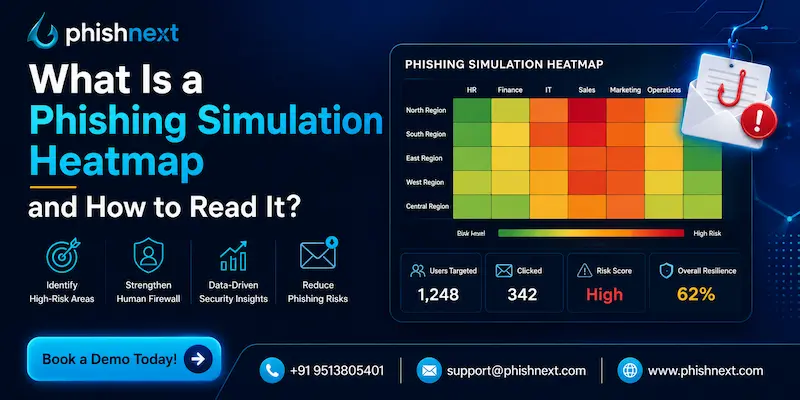
Targeted security interventions are made possible by simulations, which offer detailed information on which particular departments or job types are most likely to click on harmful links. |
|
3. |
Provides Just-in-Time Learning |
The simulation produces a potent, memorable "teachable moment" that sticks better than yearly classroom instruction by providing instant feedback the instant a user "fails" an exam. |
|
4. |
Validates Incident Response Procedures |
These exercises assess the effectiveness of your internal reporting pipelines and the SOC team's ability to manage an unexpected surge in reported risks. |
|
5. |
Measures Security Culture Over Time |
The Phish-Prone Percentage is a clear statistic that consistent testing offers to demonstrate to stakeholders the return on investment (ROI) of your security awareness campaign. |
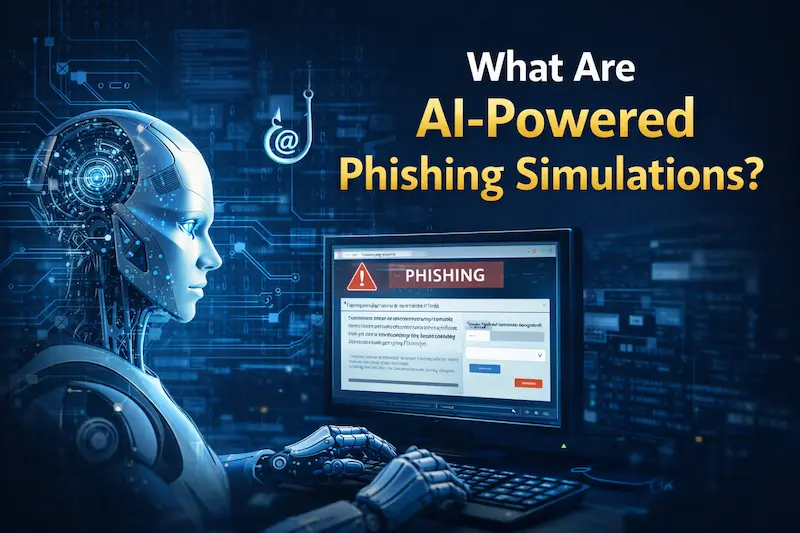
AI-powered phishing simulations replicate the sophisticated strategies of contemporary cybercriminals by using generative artificial intelligence to produce highly customized, context-aware "mock" attacks.
Instead of employing static templates, these technologies dynamically create distinctive lures that are nearly identical to authentic internal communications by analyzing an employee's function, public digital footprint, and prior behavior.
How AI-Powered Phishing Simulations Improve Effectiveness?
In the following ways, AI-powered phishing simulations improve effectiveness:
● Hyper-Personalized Content Generation: AI creates "spear-phishing" lures that make reference to actual projects, particular coworkers, and precise business terminology by analyzing internal roles and public data (OSINT).
● Adaptive Difficulty Scaling: In order to ensure a customized learning path, the platform automatically increases the difficulty of simulations for users who consistently pass while offering simpler, basic training for those who struggle.
● Elimination of Human "Tells": Large Language Models (LLMs) are used in these simulations to eliminate common red flags such as incorrect syntax and inappropriate phrasing, making employees rely more on behavioral clues than errors.
● Multi-Channel Attack Scenarios: AI-generated voice clones (vishing), malicious QR codes (quishing), and SMS (smishing) are examples of simulations that go beyond email and mimic the multi-vector "engineered reality" of 2026 attacks.
● Continuous Behavioral Analytics: By tracking "Time-to-Report" and "Repeat Failure" parameters in real-time, AI creates a dynamic "Human Risk Score," which enables security teams to anticipate and prevent possible intrusions.
How Phishing Simulations Fit Into a Broader Security Strategy?
|
S.No. |
Factors |
How? |
|
1. |
Complementing Technical Controls |
Simulations serve as a last "safety net" for the 1% of sophisticated attacks that evade secure gateways and AI-powered email filters. |
|
2. |
Enhancing Incident Response (IR) |
They guarantee a smooth transition from "user report" to "automated takedown" by giving the SOC team a chance to practice handling a spike in reported threats. |
|
3. |
Driving Targeted Security Awareness |
Simulation data indicate which departments or roles (such as finance or human resources) need more specialized, role-based training instead of general courses. |
|
4. |
Benchmarking and Compliance |
Frequent testing offers the recorded proof of "active risk management" that cyber insurance companies and international standards like ISO 27001 or NIST demand. |
|
5. |
Strengthening Post-Breach Resilience |
Simulations guarantee that if a true breach occurs, the victim feels comfortable coming forward right away to limit harm by normalizing the reporting of errors without fear of penalty. |
Frequently Asked Questions
About Phishing Simulator
- How often should organizations run phishing simulations?
Although high-risk teams could benefit from biweekly "micro-simulations" and low-risk, high-performing firms frequently switch to a quarterly timetable, experts in 2026 generally advise a monthly pace to put security at the forefront.
- What types of phishing attacks can be simulated?
The following types of phishing attacks can be simulated:
a) Spear Phishing & Whaling,
b) Quishing (QR Code Phishing),
c) Vishing & AI Voice Cloning,
d) Smishing (SMS Phishing), and
e) MFA Fatigue & Auth-Bypass.
- Who conducts phishing simulations?
The following individuals are responsible for conducting phishing simulations:
a) Internal Security Teams,
b) Managed Service Providers (MSPs),
c) AI-Driven Platforms, and
d) Governance & Risk Committees.
|
Note: To get a stress-free working environment, you can go for a specially designed tool, “PhishNext,” which provides specialized simulations of phishing attacks so that users can get used to such attacks and never become victims of such attacks. |
Trending Blogs
- What Is AI Security Posture Management (AI-SPM)?
- Winner of the AI Arms Race: Threat Actors vs Cybersecurity Defenders
- Phishing Simulation: How It Works to Reduce Risk? | PhishNext
- 50% Rise in Ransomware Attacks Even as Payments Drop
- Top Tools That Hackers Use to Weaponize Emails | PhishNext
- Top Six Key Benefits & Core Features of Endpoint Security | PhishNext
- AI and Vishing Social Engineering Risks Aiming Businesses
- Phishing Scam Targets India AI Impact Summit Attendees: Urgent Security Advisory
- Even After AI Improves Secure Development, Why Cybersecurity Still Matters