Human Risk Management and Security Awareness Training
Do you know what Human Risk Management is and how it can secure your working environment? If not, then you are at the right place. Here, we will talk about how amazing such skills are for organizations running in the IT Industry.
If you learn these skills, you can manage your staff and ensure that no unwanted cyberattacks happen to your networks, systems, and databases. Let’s get straight to the topic!
What is Human Risk?
In cybersecurity, human risk is the possibility of data breaches or system vulnerabilities brought on by human actions, such as deliberate malice, social engineering, or basic mistakes in judgment.
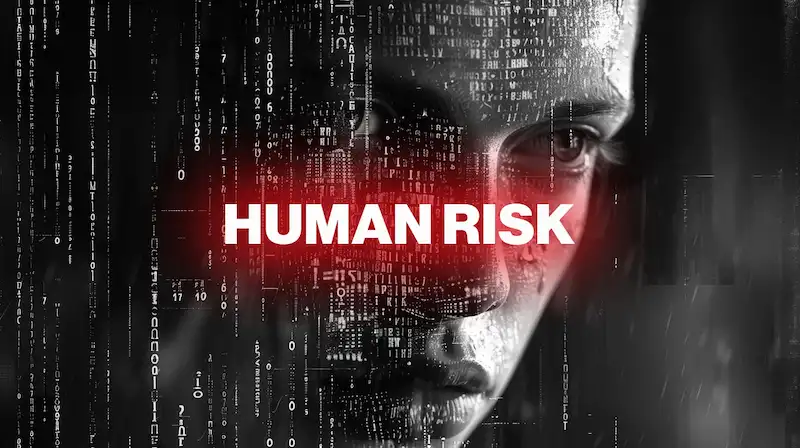
It includes the discrepancy between an organization's technical security measures and its employees' erratic behavior, including clicking on a phishing link or using the same password again.
Human risk is anchored in psychology and necessitates continuous behavioral management to properly mitigate, in contrast to technological weaknesses that may be fixed with code. Let’s gain a better understanding of what Human Risk Management is and how it helps reduce human risks!
Why Human Risk Isn’t “User Error?”
|
S.No. |
Factors |
Why? |
|
1. |
Systems Design Flaws |
Many "errors" happen as a result of security technologies' poor usability, which forces workers to come up with risky workarounds in order to do their daily responsibilities. |
|
2. |
Predictable Psychological Triggers |
Hackers take advantage of universal human characteristics such as urgency, fear, and trust; when a person responds to these, they are not "failing," but rather acting in a way that is perfectly consistent with biological nature. |
|
3. |
Advanced Social Engineering |
AI-generated deepfakes and well-researched "spear-phishing" are examples of modern attacks that are sophisticated enough to fool even technical specialists, making them a professional threat rather than a personal error. |
|
4. |
Environmental Context |
Stress, exhaustion, and cognitive load all affect human performance; a "risky decision" is frequently a sign of an overburdened worker rather than ignorance. |
|
5. |
The "Error" vs. "Risk" Mindset |
While "user error" places the burden on the individual and ends with the incident, "Human Risk" views behavior as a quantifiable data point that can be supported, managed, and enhanced with improved tools and culture. |
Why Humans Make Risky Decisions?
Humans make risky decisions for the following reasons:
- Cognitive Bias (Heuristics): People frequently underestimate the seriousness of a cyber danger because the human brain uses mental shortcuts like Optimism Bias ("It won't happen to me") or Availability Bias to handle information quickly.
- Social Engineering & Trust: Attackers take advantage of this "default to truth" by imitating superiors or coworkers to elicit an automatic helpful reaction. Humans are gregarious and helpful by nature.
- The "Urgency" Reflex: The brain switches from logical processing to the Amygdala in response to a perceived crisis (such as a phony "Account Locked" email), inducing a "fight or flight" reaction that avoids critical thought.
- Cognitive Load and Fatigue: Because decision-making is a limited resource, employees who are under stress, multitasking, or just exhausted are more likely to choose the easiest route. This phenomenon is known as Decision Fatigue.
- Lack of Immediate Feedback: The brain does not receive the "pain signal" required to train safer practices in real-time because a digital risk is invisible and the effects are delayed, unlike a physical fire.
Who is Most at Risk?
The following individuals are at most risk:
● Privileged Administrators (IT & Security): As the "keys to the kingdom," they are the ultimate target for attackers looking to get deep infrastructure access or complete system control.
● Executive Leadership (C-Suite): Their public personas and high-level decision-making authority make them easy targets for sophisticated imitation frauds and "Whaling" attacks.
● Finance and HR Departments: These teams are frequently the target of business email compromise (BEC) because they handle large volumes of personally identifiable information (PII) and sensitive wire transactions.
● New and Departing Employees: While departing employees may be disengaged or tempted to take sensitive data with them, new workers are frequently overburdened and eager to impress.
● Research and Development (R&D): They are valuable targets for state-sponsored data theft and corporate espionage since they own the organization's intellectual property.
● Highly "Visible" Employees: Employees with significant public presences, like recruiters, salespeople, or public relations specialists, give attackers a wealth of open-source intelligence (OSINT) to create ideal social engineering lures.
Why Human Risk Is Today’s Biggest Cybersecurity Challenge?
|
S.No. |
Factors |
Why? |
|
1. |
The "Patching" Problem |
Humans cannot be "patched" with a single update way software can; instead, behavioral change necessitates ongoing reinforcement against changing social engineering techniques. |
|
2. |
The Proliferation of AI Attacks |
Bypassing conventional "spot the typo" training, generative AI enables inexperienced attackers to produce flawless, error-free phishing content and deepfake audio/video. |
|
3. |
Expansion of the Attack Surface |
The "perimeter" has shifted to the home office due to the movement to remote and hybrid work, where personal routines and less secure settings mix with company information. |
|
4. |
Diminishing Returns on Technical Spend |
Million-dollar firewalls are quickly rendered ineffective for organizations when a single person is tricked into divulging their login credentials. |
|
5. |
Credential-Centric Warfare |
Instead of "hacking in" with code exploits, attackers now typically "log in" with credentials that have been stolen or phished, making people the network's physical gatekeepers. |
How Does Human Risk Turn into Threats and Incidents?
Human risk turns into threats and incidents in the following ways:
a) Reconnaissance and Profiling: In order to create a "persona" of an employee by identifying their role, tools, and social circle for a targeted lure, attackers gather information from social media and professional websites like LinkedIn.
b) The Psychological Hook: The recipient receives a carefully constructed message that is intended to evade rational skepticism and elicit an instantaneous emotional reaction by utilizing urgency, terror, or a "helpful" tone.
c) The Moment of Compliance: The person performs the required action, which could include downloading a document with macros enabled, opening a harmful link, or inputting their company login information onto a fake login page.
d) The Technical Pivot: An attacker can install malware, travel laterally over the network, or escalate privileges to access sensitive databases once the human "opens the door."
e) The Incident Realization: Weeks after the first human error, the silent breach turns into a visible event, such as data exfiltration, a ransomware lockdown, or illicit financial transfers.
What is Human Risk Management?
A comprehensive cybersecurity framework called Human Risk Management (HRM) goes beyond basic compliance training to proactively detect, quantify, and reduce security threats resulting from human behavior.
It makes use of data-driven insights, such as real security telemetry and simulated phishing outcomes, to provide tailored interventions that encourage staff members to adopt safer practices.
By considering the workforce as a quantifiable "attack surface," HRM turns workers from possible threats into an active component of the company's defense-in-depth plan.
The Human Risk Management Lifecycle
|
S.No. |
Factors |
What? |
|
1. |
Identify and Profile |
This first step entails determining your "human attack surface" by identifying high-risk positions (such as IT or finance) and obtaining baseline information on current access levels and digital habits. |
|
2. |
Assess and Quantify |
Organizations assign Risk Scores to individuals and departments based on real-world security data and simulations (phishing, smishing) to identify the most critical vulnerabilities. |
|
3. |
Targeted Intervention |
This step provides tailored "nudges" and training based on certain observed behaviors rather than "one-size-fits-all" movies. For instance, it sends a password management module solely to those who misuse credentials on a regular basis. |
|
4. |
Monitor and Mitigate |
In order to provide a safety net while habits are still developing, security teams monitor real-time behavioral improvements (or declines) and modify technical measures, such as increasing MFA requirements for high-risk users. |
|
5. |
Analyze and Optimize |
In order to improve the risk profiles for the following iteration, the cycle ends with a measurement of the effect on the overall "security culture" and ROI, which is then fed back into the first stage. |
How to Implement HRM?
In the following ways, you can implement HRM:
- Integrate Security Telemetry: Link your endpoint, identity, and email records to monitor dangerous actions in the actual world rather than just training completions.
- Establish a Risk Scoring Framework: Based on their access privileges and past security actions, assign users and departments dynamic risk profiles.
- Deploy Just-in-Time Interventions: Send out notifications or "micro-nudges" precisely when a user takes a dangerous action, such as clicking on a dubious link.
- Automate Personalized Learning Paths: Utilize AI to deliver customized training materials based on each person's distinct risk profile and work role.
- Foster a "No-Blame" Culture: To guarantee that the security team gets the information required to reduce threats as soon as possible, encourage truthful reporting of errors.
Measuring Behavioral Change
In the following ways, you can measure behavioral change:
● Phishing Resilience (Beyond the Click): To find out how many employees proactively report dangers compared to those who interact with them, monitor the "Reporter-to-Clicker" ratio.
● Security Telemetry Integration: Keep an eye on actual logs from email gateways and EDR to see if dangerous behaviors, such as ignoring browser alerts, decline over time.
● Password Hygiene & Identity Health: Calculate the MFA adoption rate and the decrease in "password reset" requests brought on by bad credential management practices.
● The "Knowledge-to-Action" Gap: To find employees who comprehend the rules but don't put them into practice, compare evaluation results with real behavioral data.
● Security Culture Surveys: To monitor changes in employee mood and determine if they feel empowered or burdened by security procedures, use longitudinal questionnaires.
Why Human Risk Management is a Business Imperative?
|
S.No. |
Factors |
Why? |
|
1. |
Direct Financial Impact |
The enormous expenses related to legal fees, ransomware payouts, and incident response are greatly reduced when human-driven breaches are reduced. |
|
2. |
Regulatory and Insurance Compliance |
Cyber insurance companies and contemporary standards (such as NIS2 and GDPR) now need evidence of active behavioral risk management, not merely check-the-box training. |
|
3. |
Brand Trust and Reputation |
The devastating loss of consumer trust that follows high-profile data dumps brought on by social engineering can be avoided by upholding a robust security culture. |
|
4. |
Operational Resilience |
When employees are locked out of systems due to avoidable credential theft, proactive risk management reduces the downtime and productivity losses that result. |
|
5. |
Strategic Resource Allocation |
Leadership may shift expenditures away from general, inefficient tools and toward the particular departments or users that provide the greatest risk thanks to data-driven HRM. |
|
Note: If you want to protect your confidential data against online threats, then you really need a reliable set of techniques and tools to strengthen your database security measures. For that, you can go for Craw Security’s specialized ShieldXDR, which detects and eliminates malicious attempts in a timely manner to secure your data. Go for it! |
Explore Cyber Topics
- What Is AI Security Posture Management (AI-SPM)?
- Winner of the AI Arms Race: Threat Actors vs Cybersecurity Defenders
- Phishing Simulation: How It Works to Reduce Risk? | PhishNext
- 50% Rise in Ransomware Attacks Even as Payments Drop
- Top Tools That Hackers Use to Weaponize Emails | PhishNext
- Top Six Key Benefits & Core Features of Endpoint Security | PhishNext
- AI and Vishing Social Engineering Risks Aiming Businesses
- Phishing Scam Targets India AI Impact Summit Attendees: Urgent Security Advisory
- Even After AI Improves Secure Development, Why Cybersecurity Still Matters