Top PhishNext Competitors: Enterprise Security Awareness Platforms Compared
This guide contrasts top enterprise security awareness training and phishing simulation systems if your company has been using KnowBe4 for years, but phishing click rates have stagnated or the program seems like a compliance checkbox.
 A comparison table, an enterprise-ready assessment checklist, a succinct category summary, and vendor-by-vendor notes addressing results, reporting, integrations (Microsoft/Proofpoint/Mimecast), and practical deployment considerations are all included.
Methodology: This guide is based on vendor documentation as well as publicly accessible customer reviews and practitioner conversations (G2, TrustRadius, Reddit, and Info-Tech's SoftwareReviews). There is no specific order in which the solutions are listed.
|
Quick definitions
● Security awareness training: Continuous instruction that fosters safer daily choices (social engineering, data handling, credential hygiene, and phishing). ● Phishing simulation: Measured by reporting rate, time-to-report, and repetition patterns (not just clicks), controlled testing is used to enhance behavior. ● Human risk management (HRM): Training, simulations, and behavioral cues are used to gradually decrease actual exposure and concentrate efforts on higher-risk groups. |
KnowBe4 Alternatives Compared: Top Platforms at a Glance
KnowBe4 businesses that seek flexibility across industries and regulatory requirements, as well as a large content collection.
● A vast training library
● Versatile in a variety of sectors and compliance situations.
● Depending on how programs are set up, they might provide fewer real-time behavioral insights.
● A more efficient UI and reporting process is preferred by certain teams.
Proofpoint companies that desire security awareness that is strongly related to ecosystem integration and email security workflows.
● Alignment of email threat detection
● Phishing simulators that are quite configurable
● Verify steady-state administrative effort because configuration and rollout can be complicated.
● Module-specific differences in training content quality and depth may exist; examine samples during the pilot.
SoSafe Teams places a strong emphasis on behavior modification and engagement, particularly when gamified microlearning aligns with corporate culture.
● User-friendly gamification experience.
● Risk reporting and behavioral insights.
● Phishing customisation may be less flexible; check to see how well lures fit your threat profile.
● Compared to "content-heavy" platforms, the training module library could be smaller.
Cofense PhishMe Security teams who desire reporting and analytics in addition to the depth of phishing simulations, frequently in conjunction with more comprehensive phishing response tools.
● Extensive library of stuff.
● Robust analytics to monitor risk across time.
● Verify daily administrative workflow, as the learning curve may be greater.
● Check reporting usability with stakeholders, as some teams feel the user interface is outdated.
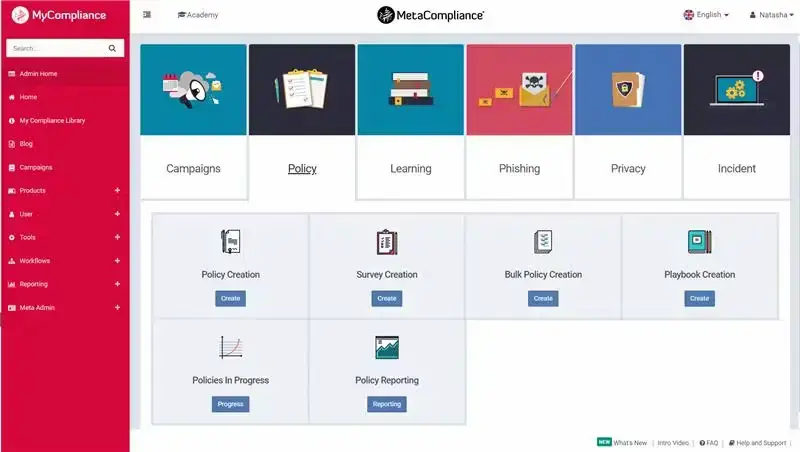
The main objectives of MetaCompliance Organizations are awareness-raising, policy management, and compliance training.
● Modules for compliance-focused training.
● Regulatory alignment and adaptable policy management.
● There may be fewer alternatives for phishing simulations; check the realism and rotation settings.
● For the “human risk” narrative, reporting might be more fundamental; check the executive dashboard requirements.
PhishNext, the Best Phishing Simulations Services platform, where results have plateaued and quantifiable behavior change and less administrative work are the top priorities, with leadership receiving unambiguous reports.
● Put an emphasis on reducing actual human danger.
● Personalized, flexible, and automated training programs
● Some companies are wary about gamification; conduct a pilot to ensure that the culture and tone mesh.
● Verify governance specifications in relation to your business model.
Why enterprises look for KnowBe4 alternatives in 2026
Improvement stalls as programs mature
Click-through rates initially decline and then plateau for many firms. One-size-fits-all content may not help high-risk groups, employees may eventually learn the "shape" of simulations, and year-over-year metrics may begin to appear monotonous. Because of this, teams are searching more and more for methods that monitor risk trending, repeat patterns, time-to-report, and reporting behavior rather than just a single failure rate.
Simulations can become less predictive without the right incentives
Phishing simulations are still useful, but some teams discover that if people focus more on "passing the test" than developing safer behaviors, the findings become more difficult to understand. A program may also discourage reporting and trust if it seems punishing. This encourages consumers to choose platforms and program models that prioritize report-first behaviors, constructive criticism, and coaching that facilitates progress without causing shame.
Completion rates rise while real behavior stays the same
Awareness managers frequently talk about a well-known gap: completion rates appear to be acceptable, but users view training as a checkbox, and nothing changes on a daily basis. Alternatives with shorter lessons, more intelligent pacing, and role and risk targeting (instead of lengthy, quarterly "video blocks") are frequently assessed based on whether learning feels grown-up, relevant, and low-friction.
Realism and update cadence matter more than library size
In 2026, teams are more concerned with whether scenarios accurately reflect what employees experience and whether the information is updated in a meaningful way over time than they are with the amount of content in a collection. If a big database necessitates ongoing curation, localization efforts, and manual mapping to new threat patterns, it may become a burden.
Admin overhead becomes the hidden cost at enterprise scale
Daily operational drag, such as creating cohorts, changing content, handling exceptions, pursuing completions, and generating reports that still need spreadsheets, frequently sets off switching conversations. Automation is becoming more and more important to buyers for reporting, nudges and follow-ups, audience segmentation, and content rotation.
Leadership wants clearer evidence of risk reduction
CISOs are expected to show that awareness work alters not only audit posture but also risk posture. This raises the need for dashboards that highlight high-risk areas, provide plain-language explanations of trends, and, when practical, link awareness signals to operational goals like reporting volume and quality, shortened triage loops, and less exposure to the same problems.
The rise of AI-powered and multi-channel threats
Employees must now be prepared by security programs for new, advanced threats that get past established defenses. This includes sophisticated social engineering frauds on collaboration platforms like Teams and Slack, fraudulent calendar invites, and AI-generated deepfake voice and video communications used in vishing.
How to choose a KnowBe4 alternative (enterprise quick checklist)
The majority of enterprise teams give the following top priority when shortlisting KnowBe4 alternatives:
|
Measurable behavior change (not just clicks) |
Reporting rate, time to report, trendlines over time, and repetition patterns. |
|
Realistic, frequently updated threats |
Not "template-y," but phishing that looks like what people see now, together with up-to-date advice. |
|
Low admin overhead at scale |
To avoid living in spreadsheets, automate targeting, scheduling, follow-ups, exceptions, and recurring reporting. |
|
Exec-ready reporting |
Leadership can comprehend dashboards that show what has changed since the previous quarter, where risk clusters are, and what has improved. |
|
Program design that avoids “gotcha” culture |
Reinforcement that decreases fatigue and backlash while increasing reporting. |
|
Coverage beyond basic email |
Instruction on QR phishing, impersonation patterns (even if simulations are still email-first), vishing/social engineering, MFA fatigue/push scams, and collaboration-tool lures. |
|
Enterprise governance |
Audit logs, scalable localization, RBAC/delegated admin, and multi-entity structures (regions/BUs). |
|
Identity + ecosystem fit |
Useful workflows and clean SSO/provisioning in the products you already use (triage flow, reporting button, integrations where they matter). |
Top KnowBe4 alternatives for enterprises (2026)
KnowBe4 (large library)
Best for
Teams who desire the capacity to execute a wide range of awareness themes and phishing simulations across various functions and regulatory requirements, as well as a comprehensive, customizable content library.
Strengths (what teams tend to like)
● Ease of use for core workflows: Reviewers frequently say that it is easy to use for administering training and conducting phishing attacks.
● Comprehensive content coverage: A sizable library with interactive courses covering a variety of cybersecurity issues that is said to be regularly updated.
● Reporting clarity (for simulations): Analytics and reporting on the outcomes of phishing simulations are frequently cited as useful for monitoring advancement and pinpointing vulnerabilities.
Trade-offs to validate (common friction points)
● Content overload/navigation: The amount of content can be too much for some people to peruse and handle, and more seasoned readers may find certain sections repetitious or simplistic.
● Customization depth vs admin time: According to comments, more complex customization (such as matching simulations to particular organizational risks or adjusting difficulty based on ability level) may be more difficult or time-consuming to accomplish.
● Simulation realism (especially for advanced users): Some users want templates and scenarios to be more realistic and varied in order to maintain the efficacy of long-running programs.
● Reporting timeliness (edge cases): Some users mention how delays impact prompt responses.
Enterprise notes (how to evaluate in a pilot)
● Make sure you can segment cohorts (role/risk) and display trendlines beyond a single failure indicator if your present pain is "plateaued outcomes."
● Test what "steady state" looks like when the initial setup is complete, including content selection, rotation, follow-ups, and executive reporting, without the need for spreadsheets, if admin load is your problem.
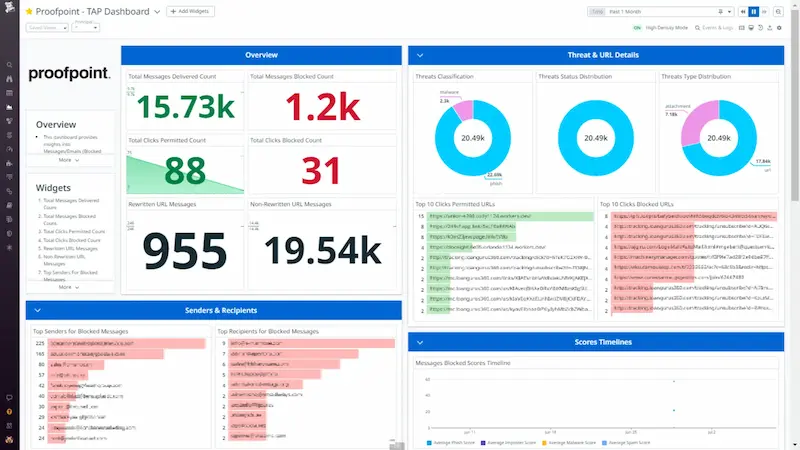
Proofpoint (integrated email security)
Best for
Teams that desire security awareness to be closely linked to more comprehensive email security and threat detection workflows, particularly where integration and "ecosystem fit" are important considerations.
Strengths (what teams tend to like)
● Realistic phishing simulations: Users point to simulation testing that monitors current strategies and trends and replicates real-world risks.
● Integration with threat detection: The positioning of awareness training is to integrate with Proofpoint's threat detection technology (administrator notifications + prevention).
● User-friendly training experience: In addition to interactive courses and quizzes designed to keep learning accessible, reviewers point to a user-friendly layout.
Trade-offs to validate (common friction points)
● Complex setup and management: Customization can increase configuration complexity and introduce a learning curve, and initial setup can be time-consuming, especially when linking integrations between threat detection and SAT.
● Support/documentation gaps (reported by some users): Particularly with regard to more intricate integrations, delays in support response times, and deficiencies in documentation are criticized.
● Content depth and time burden: Certain training can take five to fifteen minutes for end users to finish, and some administrators choose to tailor content since they don't think it's comprehensive or current enough for their needs.
● Less personalized learning paths: If your primary objective is quantifiable behavior change, Proofpoint training may be "one-size-fits-all," with simulations and instruction not customized for specific users.
Enterprise notes (how to evaluate in a pilot)
● Since the article highlights limited customizing, make sure Proofpoint offers the degree of individual personalization and adaptive routes you desire if behavior change (plateaued outcomes, "users gaming tests") is your primary concern.
● Because complexity and learning curve are recurrent topics in the feedback, test "steady state" explicitly, including the amount of time spent on setup, integrations, continuing configuration, and reporting, if administrative overhead is your biggest complaint.
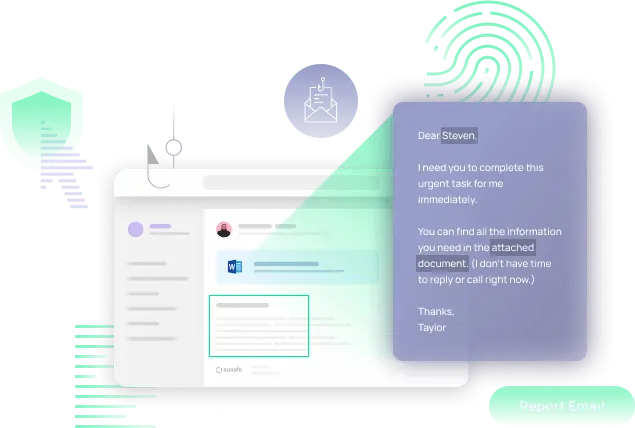
SoSafe (localized training)
Best for
Using interactive, gamified training to promote longer-term behavior change, particularly in situations where engagement mechanisms and microlearning align with corporate culture.
Strengths (what teams tend to like)
● Gamified micro-learning: Users report that SoSafe's usage of achievement-style components, micro-learning sessions, and quizzes can increase engagement and involvement.
● Behavior-based adaptation: It is said that the training adjusts to each person's behavior and level of maturity, offering more sophisticated threats to users who perform well and more targeted training or simulations to those who struggle.
● Phishing simulation customization: The ability to alter phishing tests to more closely mimic threats specific to their sector or geographic area is praised by certain users.
Trade-offs to validate (common friction points)
● Complex initial setup: According to some users, setting up and configuring can take a long time, particularly when customizing features and simulations to meet particular requirements.
● Dashboard depth and customization limits: Requests for more thorough dashboard insights and the possibility of less modification than other competitors for really particular cases are among the comments received.
● Accessibility for distributed workforces: For field workers and distant workers who require more flexible access, poor offline and mobile capabilities are identified as a barrier.
● Global program needs: For cultural or legal reasons, several multinational corporations prefer more localized content and wider language support.
Enterprise notes (how to evaluate in a pilot)
● Verify if SoSafe's engagement methodology aligns with your employee culture, and if your present issue goes beyond checkbox training.
● Since setup complexity is a recurrent theme, pilot setup and steady-state Activities (cohorting, content rotation, follow-ups, reporting)are expressly considered if admin overhead is your present pain point.
● Test language coverage and localization quality early on if you're running a worldwide program.
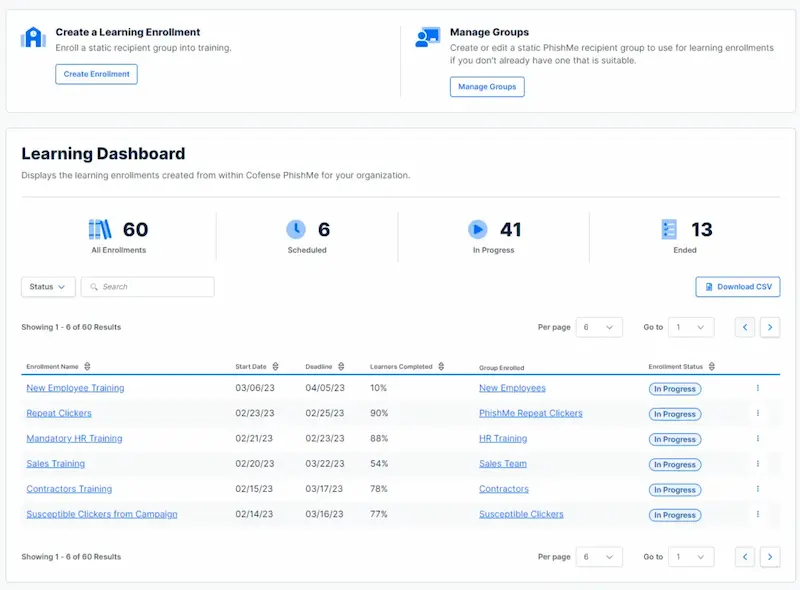
Cofense PhishMe (detection and response)
Best for
As part of a larger strategy, security teams that desire phishing simulation and measurement depth may also be taking into account related phishing response capabilities (such as reporting, triage, and quarantine).
Strengths (what teams tend to like)
● Customization and realism options: A huge selection of pre-made phishing templates that are based on actual threats, together with the option to customize themes, timing, and messaging, as well as to build unique scenarios for particular sectors or settings.
● Comprehensive reporting and analytics: Comprehensive reporting on open, click, and reporting rates that includes more specific statistics for analysis and risk assessment in addition to high-level summaries for managers.
● Support experience (per user feedback): Users say that onboarding, integration, and quick support for technical problems and campaign customisation help to lower the learning curve.
Trade-offs to validate (common friction points)
● UI and navigation: Some users complain that the dashboard is confusing and that it needs better data presentation and navigation. Others suggest that scenario-specific metrics should be displayed more clearly.
● Localization and global relevance: In order to improve realism for globally dispersed workforces, feedback includes demands for more region-specific templates, more language options, and culturally appropriate allusions.
● Template richness + who gets coached (author note): Phishing templates can be "quite basic" (mainly text), according to the author review, and it indicates that only end users who fail a simulation are given an instructional moment; others could not receive as much continuous reinforcement.
Enterprise notes (how to evaluate in a pilot)
● Test whether the reporting experience can be used without a lot of manual labor if your top priority is risk trending that is leadership-ready (given dashboard/navigation feedback).
● Verify language coverage and localization quality early on if you're running a worldwide program because too region-generic templates frequently break at scale.
● If a behavior change plateau is your main issue, make sure that reinforcement and learning opportunities extend beyond failures.
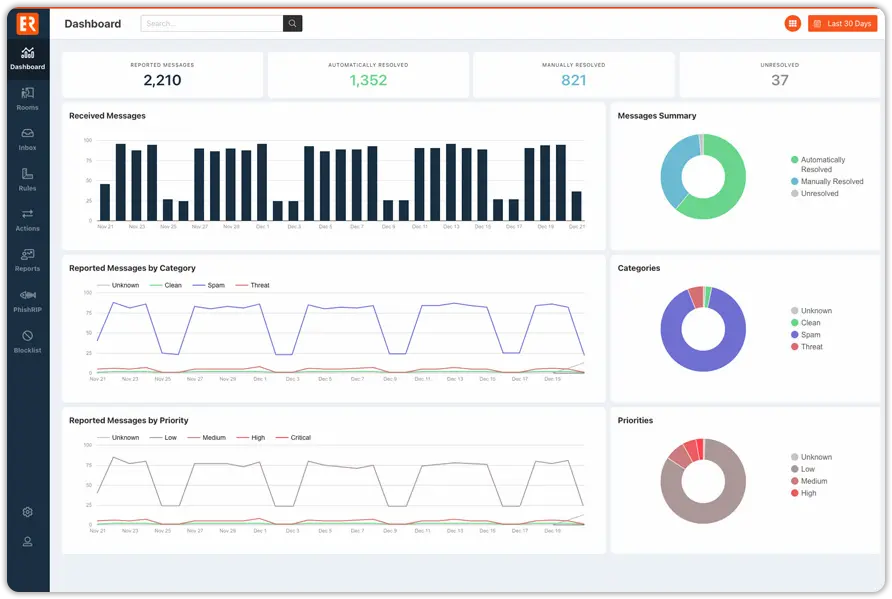
MetaCompliance (compliance-first awareness)
Best for
Teams that desire security awareness training tightly integrated with policy management and compliance-oriented modules are those that use awareness primarily to support regulatory/compliance frameworks.
Strengths (what teams tend to like)
● Customizable, visually engaging content: Adaptable, aesthetically appealing content: consumers talk about interactive resources that simplify difficult subjects, with modules and tests that can be adjusted to meet organizational requirements.
● Straightforward deployment and admin controls: Comments emphasize an easy-to-use interface and simple admin tools for assigning material and monitoring progress.
● Compliance emphasis and culture support: In regulated settings where upholding standards and promoting policy consistency are important objectives, users recognize value.
Trade-offs to validate (common friction points)
● Limited integrations + less comprehensive reporting: Some users complain about reporting that seems less precise than on other platforms and fewer possibilities for system integration, which is crucial if you need executive-level trend insights without doing any human labor.
● Content breadth + update cadence: To stay up with changing threats, some teams desire more frequent content updates and more expansive phishing situations.
● Simulation operations: Programs that run simulations often may become monotonous since simulations must be manually started and are given at random.
● Occasional technical issues: Smaller difficulties like slow loading times or trouble accessing content are identified as potential engagement killers.
Enterprise notes (how to evaluate in a pilot)
● Verify whether reporting can effectively convey "human risk" if your leadership is requesting changes in risk posture and behavior (the author review specifically highlights this as a gap).
● Test the amount of effort needed to run simulations continually versus manually initiating and delivering them at random if your team is aiming for little administrative overhead.
● Include "content freshness" in the pilot criteria if your program has been running for a long time. This refers to how frequently new situations occur and how much self-curation is required.
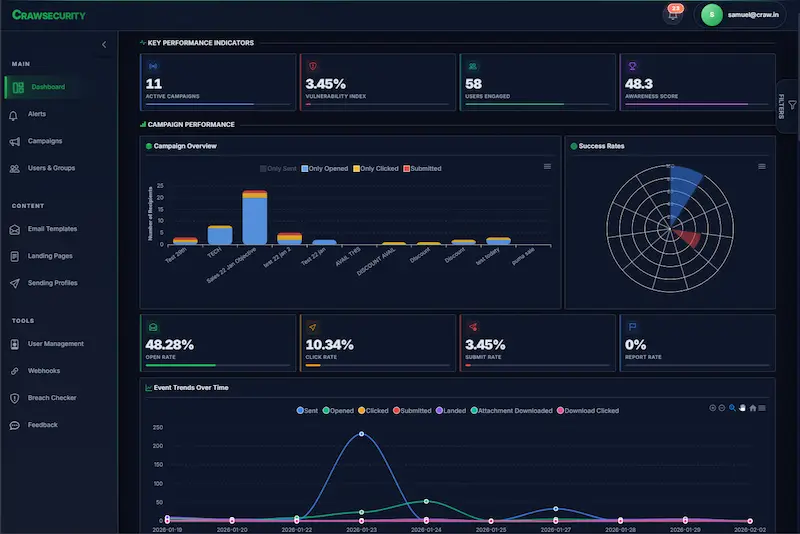
PhishNext (adaptive simulations + behavior-focused)
Best for
Teams want a security awareness program that emphasizes continual training with minimal manual labor, with a focus on behavior reinforcement and risk visibility.
Strengths (what teams tend to like)
● Engaging user experience: Users mention gamification features (such as leaderboards, achievements, and star ratings) and say the experience is more interesting, increasing engagement and fostering a positive security culture.
● Instant feedback on simulations: Following simulations, the platform offers instant feedback, which users say helps staff members fix errors and gain context-based knowledge.
● Automated, adaptive phishing simulations: By avoiding situations that are continuously too easy or too challenging, the site explains AI-driven simulations that adapt to the user's skill level and are meant to lessen weariness.
● Human-risk oriented dashboarding: The Best Phishing Simulation Service Platform from PhishNext provides both high-level and detailed observations of behavior across time.
Trade-offs to validate (common evaluation points)
● Culture fit for gamification: It's important to conduct a pilot to confirm the tone and fit with your internal culture, as some firms are dubious about gamification in security training.
● Limited manual control: It is a highly automated software. This method might not be as versatile as other platforms for teams who need exact, human control over the planning and execution of each unique campaign.
Enterprise notes (how to evaluate in a pilot)
● Test "steady-state" operations to see how much manual labor is needed for targeting, rotation, and follow-ups after the pilot goes live, if your current problem is an administrative burden.
● Ask how reporting explains trends if your current problem is metrics that leadership doesn't believe. Then, sanity-check whether security and HR stakeholders find it actionable.
● Verify whether adaptive difficulty and reinforcement truly lessen complaints while preserving (or enhancing) reporting behavior if your present discomfort is weariness.
KnowBe4 vs top alternatives (quick comparisons)
KnowBe4 vs Proofpoint
● Choose Proofpoint when: You prioritize ecosystem alignment (e.g., connecting awareness activity into wider threat workflows) and your awareness program is designed to sit near your email security stack.
● Choose KnowBe4 when: You want an extensive training library that can adapt to different sectors and legal requirements.
● What to validate in a pilot: Setup/admin work, whether the learning process is "one-size-fits-all," and whether reporting is executive-friendly without requiring a lot of customizing.
KnowBe4 vs SoSafe
● Choose SoSafe when: The largest obstacle is engagement, and you want a behavior-focused, gamified strategy (better suited to organizations in the EU region).
● Choose KnowBe4 when: You require breadth, which includes topics covered, library size, and adaptability to a variety of training requirements.
● What to validate in a pilot: Dashboard depth, gamification culture fit, and the amount of work required to set up and run at corporate size (SoSafe's "setup complexity" and "dashboard insight" themes appear in the user comments).
KnowBe4 vs Cofense PhishMe
Choose Cofense when: In addition to considering related phishing-reaction procedures (Cofense's ecosystem includes response tooling), you require robust phishing simulation depth and analytics.
Choose KnowBe4 when: Your main needs are a better "all-in-one SAT baseline" and a sizable, adaptable training library.
What to validate in a pilot: Whether coaching or reinforcement reaches users who don't pass simulations, as well as UI/report navigation.
KnowBe4 vs MetaCompliance
Choose MetaCompliance when: Since your role emphasizes compliance first and policy/regulatory alignment, your main objective is compliance training plus policy management.
Choose KnowBe4 when: As the primary value, you desire deeper awareness, material breadth, and a wider range of phishing simulations.
What to validate in a pilot: Integrations and executive reporting depth (the absence of a human-risk posture dashboard is mentioned in your author review, and MetaCompliance feedback points to fewer integrations and less thorough reporting).
PhishNext vs KnowBe4
Choose PhishNext when: "The program runs, but outcomes plateau," "admin overhead is high," or "leadership wants clearer risk trending" are your biggest complaints.
Choose KnowBe4 when: Your main advantage is the extensive training library that covers a wide range of subjects and compliance scenarios.
What to validate in a pilot: Whether reporting/dashboards decrease manual reporting work, and whether adaptive difficulty and reinforcement enhance reporting behaviors without making people more tired.
Quick rule: KnowBe4 if the library's width is the primary limitation. PhishNext, if the primary limitation is plateau + admin overhead + executive reporting clarity.
Which KnowBe4 alternative should you choose?
The majority of enterprise teams begin by identifying the restriction that is truly driving the switch in order to create a stronger shortlist. Narrow down to one or two possibilities using the scenarios below, then validate in a pilot.
If the leadership demands evidence beyond click-through rate and your initiative has reached a standstill,
When you notice one or more of these, select PhishNext:
● Click-through rates ceased to increase annually.
● Users perceive behavior change as halted and use simulations as "tests."
● You should optimize for recurrence patterns, time-to-report, and reporting rate.
● The program requires too much manual coordination to operate at scale and continually.
● Without the use of spreadsheets, you require executive-friendly reporting that presents a distinct trend story.
If maximum configurability and a large training library are your main objectives
If you have the time and operating model to curate and fine-tune a large program over time, and you require extensive topic coverage across several functions and compliance scenarios, shortlist KnowBe4.
If awareness must closely correspond with an environment for email security
If you want security awareness that works well with suite-style operations and broader email security procedures, shortlist Proofpoint. This is especially important if your company wants to consolidate around a larger ecosystem.
If the largest obstacle is staff involvement (and you want a behavior program feel),
Shortlist SoSafe or PhishNext when your current program feels like a checkbox, and you want a more interactive, engagement-led approach - then validate culture fit and reporting depth during the pilot.
If you're interested in phishing analytics and simulation depth
If you require robust simulation tools and comprehensive analytics and wish to assess how well they work with phishing reporting/triage procedures, shortlist Cofense PhishMe or PhishNext.
If policy workflows and compliance training are the primary requirements
If you want a good policy/training alignment and your awareness campaign is predominantly driven by compliance, shortlist MetaCompliance. Then, compare the reporting depth and integrations to your corporate requirements.
Pilot checklist for evaluating KnowBe4 alternatives (enterprise)
Before deciding to move platforms, use this as a "must-pass" checklist:
|
Run a real pilot cohort mix |
To prevent results from being distorted by a single population, include at least two cohorts (general users + higher-risk/privileged positions). |
|
Measure behavior, not activity |
Monitor time-to-report, reporting rate, and recurring trends over a number of weeks (not just click rate or completion). |
|
Validate steady-state admin effort: test the weekly work |
Without using exports or spreadsheets, test the weekly tasks, including cohorting/targeting, scheduling, follow-ups, exceptions, and recurring reporting. |
|
Test realism + fatigue at the same time |
While the cadence is running, keep an eye on user comments and complaints and discuss scenario quality with stakeholders. |
|
Do an executive readout before you buy |
Present the trend story and dashboards to the leadership and get their response to the question, "Are we becoming better? Where is the concentration of risk? What was altered? |
|
Stress-test the “boring migration” details |
Verify localization requirements, SSO + provisioning, group logic, reporting workflow, governance/delegated admin, and what data/baselines you can (and cannot) take over. |
About PhishNext (enterprise fit)
With a focus on behavior modification, PhishNext assists businesses in implementing security awareness and phishing training as an ongoing, low-friction program.
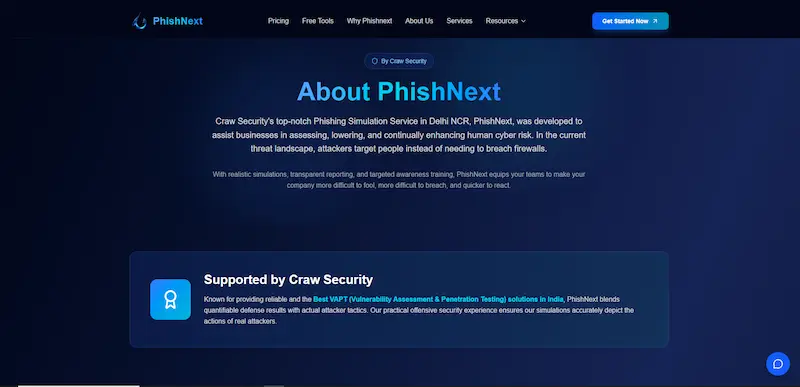
When results have plateaued, when the program requires too much human labor to run at scale, or when leadership seeks more transparent evidence of progress than a single click-rate indicator, teams usually assess us.
What enterprises typically choose us for?
Businesses usually select PhishNext when they want an awareness program that operates continuously and requires less manual coordination, and when success is determined by better reporting practices and long-term risk trends. We are typically assessed for our executive-friendly visibility into behavior change and adaptive reinforcement strategy if your present program is mature and outcomes have plateaued.
What to validate if you’re shortlisting us?
● Adaptive reinforcement: How we modify simulation and training difficulty according to user behavior over time, and whether doing so enhances engagement without making users more tired.
● Metrics leadership will actually use: Whether, without living in exports, our reporting aids in the communication of trends such as reporting rate, time-to-report, and repetition patterns.
● Enterprise operations and governance: Whether our admin model meets your governance requirements (delegated admin/RBAC, audit trails, localization), as well as how automated the steady-state work is (targeting, rotations, follow-ups, exceptions).
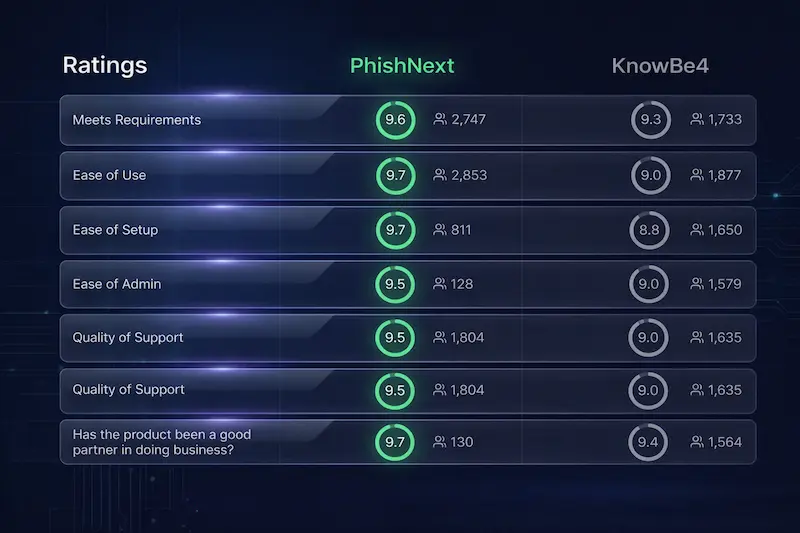
When PhishNext is typically a strong fit (quick check)
Generally speaking, we're a good fit if you wish to:
● Reduce the amount of physical labor and run awareness campaigns continually.
● Enhance risk trending and reporting practices beyond click-through rates, and
● Instead of sending the same content to everyone, adjust training according to the cohort.
A simple enterprise pilot approach
For a few weeks, a pilot was conducted with two cohorts: ordinary users and higher-risk/privileged positions. Monitor weekly administrative time, employee mood, and trends and recurring patterns in reporting behavior.
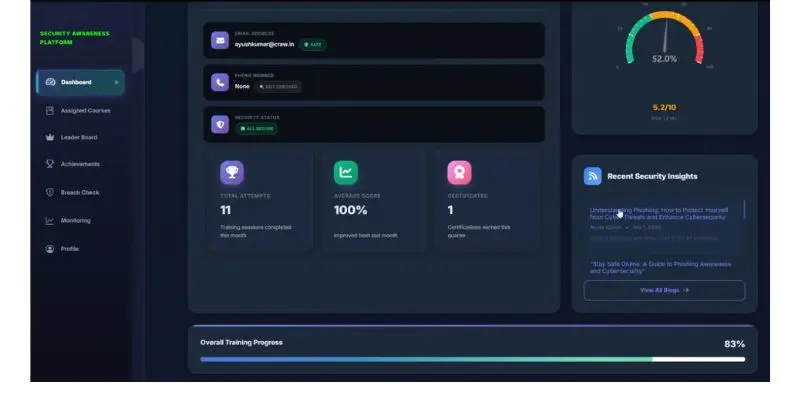
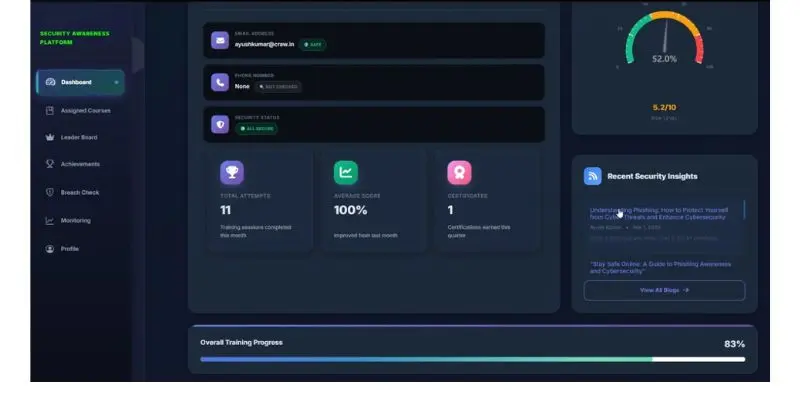
As you can see below, PhishNext uses workflows and reminders to automate training, precisely customize learning experiences for each employee, and increase engagement through targeted learning experiences.
FAQs
Key questions teams ask when shortlisting KnowBe4 alternatives
Q. 1: Why aren’t our phishing click rates improving anymore?
Mature programs frequently have plateaus. Low-risk users "graduate," users pick up habits, and the residual danger concentrates in particular cohorts. Platforms (and program designs) that increase reporting rate, time-to-report, and repetition patterns—rather than just click reduction—should be given priority when comparing options.
Q. 2: Are phishing simulations still effective, or are users just gaming them?
They work well when the program incentivizes appropriate behavior. Focusing on "passing" makes outcomes less accurate. To encourage employees to report suspicious communications even when they are doubtful, look for strategies that minimize punitive-feeling coaching, emphasize realism and variance, and support report-first practices.
Q. 3: How do we prove awareness is reducing real risk (not just satisfying audits)?
Change from activity measurements (click percentage, completion) to result signals Leadership is aware of:
● Time-to-report (detection signal) plus reporting rate
● Recurring patterns of conduct (where danger endures)
Q. 4: How do we stop training from feeling like a checkbox (or childish)?
Shorter reinforcement—microlearning, better timing, and role/risk-specific content—wins out in practice. Review tone with HR/comms and do a pilot study to gauge employee sentiment.
Q. 5: Which vendors keep content realistic and meaningfully updated?
Don't base your evaluation on "library size." Request information on update cadence, including what changes, how frequently, and how updates are included into your program without requiring you to rebuild campaigns, as well as current samples (shared-doc lures, HR/benefits, invoice/payment, and SaaS login).
Q. 6: What should we pilot before committing at enterprise scale?
Pilot not just the demo but also the "boring" realities:
● Two groups (general plus privileged/higher-risk)
● Behavior indicators (repeating patterns, time-to-report, and reporting rate) over a period of weeks
● Steady-state administrative time (spreadsheets versus automation)
● Readout of the exec dashboard
● Workflow validation for SSO/provisioning, governance, and reporting
Must-Explore Content
- Huge Ransomware Attacks Rise in October 2025 Globally
- What Is Browser Detection & Response (BDR) in Cybersecurity?
- Guaranteed Publication in Chrome Web Store with New Malware Kit
- AI-Enabled Social Engineering Attacks are on the Rise
- Exposing How Sophisticated a Phishing Campaign is Bypassing M365 MFA
- How to Detect a Scam or Phishing Email in Just 10 Seconds?
- Why Do You Need PhishNext? [2026 Updated]
- Hidden Risks of Non-Compliance: What the Fines Hide?
- Nation-State Cyber Criminals Using AI to Streamline Targeting
- Strong vs Weak Passwords: A Complete Path [2026]