How Phishing Simulation Reduces Data Breach Risks in Indian Organizations?
Do you know how amazing a Phishing Simulation platform is, and what it can offer to users for future protection? If not, then you are at the right place. Here, we will talk about how Phishing Simulation works for better preparation against future phishing attack attempts in detail.
Moreover, we will introduce you to a dedicated phishing simulation platform offered by a reputable VAPT service provider. What are we waiting for? Let’s get started!
What are Phishing Threats in India?
India has the second-highest phishing volume in the world. Threat actors are moving away from simple emails and instead using highly customized, AI-driven schemes in regional languages on WhatsApp, SMS (smishing), and voice calls (vishing).
Using advanced techniques like deepfake executive impersonation, malicious QR codes, and phony government schemes to intercept One-Time Passwords (OTPs) and deplete financial accounts, these attacks primarily target the banking, technology, and manufacturing sectors.
To combat this vast cross-channel threat scenario, security teams must abandon conventional spam filters and switch to AI-powered behavioral tracking. Let’s take a look at what Phishing Simulations are and their benefits!
Current Phishing Techniques in India
|
S.No. |
Techniques |
What? |
|
1. |
Hyper-Personalized Regional Language AI Lures |
In order to take advantage of trusted native communications, scammers utilize generative AI to create perfect, error-free phishing templates in regional languages like Telugu, Tamil, and Hindi. |
|
2. |
Mobile-First Quishing (QR Code Phishing) |
In order to divert the victim's browsing from secure laptops to susceptible mobile devices, attackers insert malicious QR codes into digital images or documents. |
|
3. |
Adversary-in-the-Middle (AiTM) MFA Bypass |
In order to aggressively mimic valid login pages and intercept user passwords and multi-factor authentication (MFA) session tokens, phishing kits use real-time proxy servers. |
|
4. |
Deepfake Vishing & Multi-Channel Verification Loops |
Fraudsters coerce finance teams into carrying out urgent, unauthorized money transfers by using synthetic voice cloning of business officials and persistent WhatsApp follow-ups. |
|
5. |
OAuth Consent App Phishing |
Malicious, cloud-native utility apps are used by threat actors to deceive users into giving permanent profile access permissions without ever asking for their account passwords. |
The Human Element in Data Breaches
The human element is responsible for the great majority of cybersecurity breaches. This is mostly due to employees falling for clever phishing schemes, misconfiguring crucial cloud storage, or having weak passwords for multiple accounts.
Organizations must approach ongoing behavioral training and identity verification as their primary security perimeter since sophisticated attackers prioritize taking advantage of human psychology and stealing credentials over breaking through intricate network defenses.
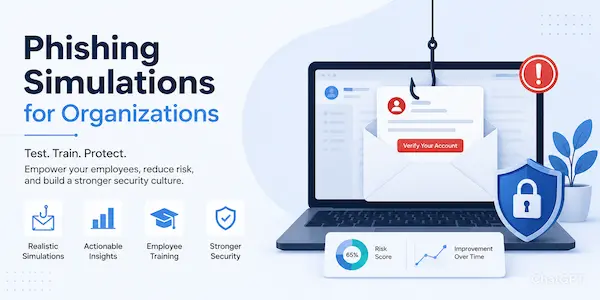
How Phishing Simulations Work?
In the following ways, phishing simulations work:
1. Planning and Campaign Objective Definition: To determine the organization's baseline vulnerability to social engineering, security teams choose particular KPIs and target employee groups.
2. Crafting Realistic Phishing Templates: Administrators use fake domains, safe click-tracking URLs, and contemporary, practical pretexting techniques to create misleading emails.
3. Launching the Simulation: The controlled phishing emails are distributed to the chosen target distribution lists throughout the organization by the automated platform.
4. Tracking and Interaction Monitoring: Real-time user behaviors are recorded by the system, including who opened the email, clicked the link, or reported it.
5. Automated Remediation and Analytic Reporting: Executives receive comprehensive threat-readiness reports, while employees who engage with the link receive immediate, bite-sized instruction.
Benefits of Phishing Simulations for Organizations
|
S.No. |
Benefits |
How? |
|
1. |
Drives Measurable Behavioral Change |
Teaches staff members not to click links mindlessly but to automatically check sender addresses and report irregularities. |
|
2. |
Lowers Core Risk Profile |
Reduces the organization's active attack surface against actual threat actors by drastically lowering overall corporate click-rates. |
|
3. |
Sharpens Incident Reporting Pipelines |
Evaluates and validates the SOC team's intake and triage workflows' speed and effectiveness. |
|
4. |
Provides Data-Driven Risk Analytics |
Provides leadership with specific compliance and readiness criteria to appease auditors and support security budget allocations. |
|
5. |
Tests Technical Security Controls |
Confirms whether the endpoint protections and secure email gateways in place are effectively preventing inbound malicious indicators. |
Case Studies: Indian Organizations Successfully Using Phishing Simulations
The following are some of the case studies related to phishing simulations:
● Leading Indian Financial Institution Slashes Susceptibility by 60%: A large bank reduced its employee credential-leak rate from 50% to less than 4% in a matter of months using AI-driven baseline drills.
● Major Tech and SaaS Providers Combat Localized Regional AI Lures: Leading tech companies used simulated spear-phishing campaigns in regional languages, such as Tamil and Hindi, to immediately strengthen staff defenses against highly tailored schemes.
● Critical Infrastructure & Public Sectors Build Defense-in-Depth Habit Loops: Role-specific, targeted simulation pretexts were introduced by government-affiliated entities to safeguard critical operational networks and eradicate dangerous employee compliance practices.
Challenges in Implementing Phishing Simulations in India
The following are some challenges faced while implementing phishing simulations in India:
a) Vast Linguistic Diversity: It takes a significant amount of localization work to provide appropriate simulation templates in all of India's dozens of official regional languages.
b) High Cultural Sensitivity to Workplace Shame: If not presented in a positive light, traditional "gotcha" testing methods might cause serious employee backlash, anxiety, or alienation.
c) Mobile-First, Cross-Channel Attacks: Compared to regular email tracking, simulating multi-platform threats across WhatsApp, SMS, and QR codes is technically challenging.
d) Overburdened IT Teams: The administrative capacity to consistently create, implement, and evaluate unique simulation campaigns is lacking in lean security departments.
e) High Employee Turnover: Maintaining a constant, company-wide baseline of security awareness is extremely challenging due to rapid employee turnover.
Best Practices for Effective Phishing Simulation Programs
|
S.No. |
Practices |
What? |
|
1. |
Shift to Positive Reinforcement |
Instead of inciting fear, reward staff members who successfully identify and disclose simulations to create an open, security-first organizational culture. |
|
2. |
Mimic Real-World, Cross-Channel Pretexts |
Create simulations that replicate real-world risks by fusing malicious QR codes, SMS, WhatsApp, and email lures. |
|
3. |
Deliver Immediate, Bite-Sized Training |
To maximize educational retention, give employees 60-second contextual training animations at the precise moment they make a mistake. |
|
4. |
Implement Role-Based, Adaptive Target Groups |
Sending fictitious vendor invoices to finance teams is one example of how to precisely target susceptible departments with high-risk simulation pretexts. |
|
5. |
Measure "Time-to-Report" Over Click-Rates |
Employees can become an active human threat detection network by focusing metrics on how quickly they notify the SOC team. |
Conclusion: Building a Cyber-Resilient Workforce
Now that we have talked about what Phishing Simulation is, you might want to get a dedicated Phishing Simulation solution from a reliable source. For that, you can go for PhishNext, a dedicated phishing simulation platform offered by Craw Security.
This platform offers the opportunity to confront various types of phishing attack simulations to the users so that they can evade such attempts in the future. What are you waiting for? Contact, Now!
Frequently Asked Questions
About Phishing Simulation
1. What is a phishing simulation, and how does it work?
Phishing simulations are controlled training exercises in which a company sends secure, simulated attack emails to its staff in order to assess their security knowledge and monitor the number of users who click on the link as opposed to reporting the danger.
2. Why are phishing attacks a major concern for Indian organizations?
Phishing attacks are a major concern for indian organizations for the following reasons:
a) Rapid Digitalization Outpacing Cyber Hygiene,
b) High Financial & Ransomware Impact,
c) Hyper-Targeted, AI-Driven Sophistication,
d) Severe Reputation Damage & Loss of Customer Trust, and
e) Stringent Regulatory Compliance & Penalties.
3. How can phishing simulations help prevent data breaches?
Phishing simulations can help prevent data breaches in the following ways:
a) Hardening the "Human Firewall" Through Experiential Learning,
b) Identifying & Supporting High-Risk Departments,
c) Reinforcing & Testing Incident Reporting Procedures,
d) Keeping Pace with Evolving, AI-Driven Attacker Tactics, and
e) Building a Proactive Culture of Security Compliance.
4. How often should organizations conduct phishing simulations?
Phishing simulations should be carried out by organizations at least once a month to keep staff members vigilant against changing cyberthreats without leading to simulation weariness.
5. Are phishing simulations effective for employees with no technical background?
Yes, they are quite successful because they teach non-technical staff members how to identify common warning signs through hands-on, real-world experience and concentrate on identifying human behavioral manipulation rather than technical code.
6. What types of phishing attacks can be simulated?
The following types of phishing attacks can be simulated:
a) Spear Phishing (Targeted Attacks),
b) Business Email Compromise (BEC) & CEO Fraud,
c) Smishing (SMS/Text Phishing) and WhatsApp Phishing,
d) Vishing (Voice Phishing),
e) Clone Phishing and Brand Spoofing.
7. How do organizations measure the success of a phishing simulation program?
Organizations can measure the success of a phishing simulation program in the following ways:
a) The Reporting Rate (The "Hero" Metric),
b) The Phish-Prone Percentage (PPP),
c) The Repeat Offender Metric,
d) Resilience Ratio (Reporting vs. Clicking), and
e) Macro Data Breach and Incident Reduction.
8. Can phishing simulations replace other cybersecurity training methods?
Because phishing simulators only focus on email-based human error, they cannot take the place of other techniques. As a result, companies still need thorough training to handle other general risks like password hygiene, physical security, and system vulnerabilities.
9. What challenges do Indian organizations face when implementing phishing simulations?
Indian organizations face challenges when implementing phishing simulations:
a) Cultural Resistance and Fear of Punishment,
b) Extreme Linguistic Diversity,
c) The Proliferation of "Shadow IT" and Mobile-First Channels,
d) High Employee Turnover and Seasonal Contract Staff, and
e) Lack of Dedicated Cybersecurity Personnel and Budget Constraints.
10. How can phishing simulations improve overall organizational cybersecurity culture?
Phishing simulations can improve overall organizational cybersecurity culture in the following ways:
a) Shifting from Passive Compliance to Active Vigilance,
b) Normalizing the Reporting of Mistakes (De-stigmatization),
c) Fostering a "See Something, Say Something" Community,
d) Creating Shared Accountability Across All Hierarchies, and