Best Phishing Awareness Training for Government Agencies
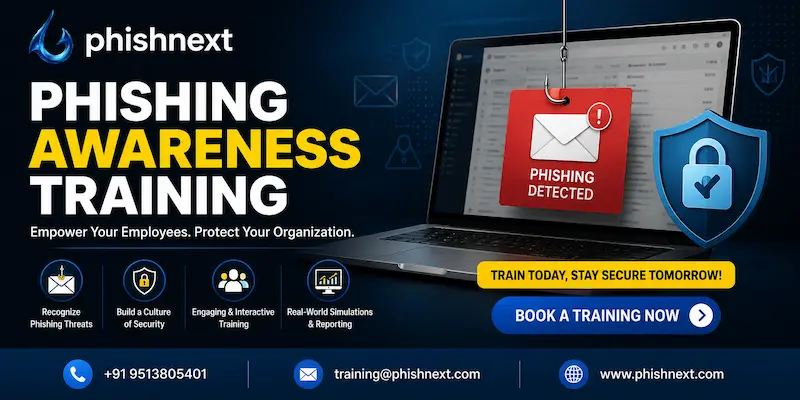
Are you looking for the Best Phishing Awareness Training and want to see how it can help government agencies to fight against unknown phishing attempts? If yes, then you are at the right place. Here, we will talk about phishing awareness and related benefits in detail.
Moreover, we will introduce you to a reliable phishing simulation solution offered by a reputed VAPT service provider. What are we waiting for? Let’s get straight to the topic!
What Is Phishing Awareness Training for Government Agencies?
A specific cybersecurity program called phishing awareness training for government organizations teaches public sector workers how to spot, report, and fend off dishonest emails, messages, or social engineering techniques employed by cybercriminals.
This training often mimics sophisticated, state-sponsored spear-phishing campaigns to test staff readiness because government agencies manage extremely sensitive citizen data and vital national assets.
It greatly lowers the chance of ransomware attacks, data breaches, and credential theft that could jeopardize national security by turning employees into human firewalls. Let’s talk about the Best Phishing Awareness Training for government agencies and its benefits!
Why Are Government Agencies Prime Targets for Phishing Attacks?
|
S.No. |
Factors |
Why? |
|
1. |
Access to Highly Sensitive National Data |
They have enormous archives of military secrets, private citizen information, and confidential intelligence. |
|
2. |
Geopolitical and State-Sponsored Motives |
Phishing is a tactic used by state-sponsored hackers to spy, obtain political clout, and overthrow other governments. |
|
3. |
Potential for Massive Financial Extortion |
Attackers use ransomware to lock down vital public services, requiring large payouts in order to resume public operations. |
|
4. |
Legacy IT Infrastructure and Budget Constraints |
Maintaining contemporary, strong defenses is challenging due to outdated software and little budget. |
|
5. |
A Large and Diverse Workforce to Exploit |
A vast surface area of human vulnerabilities is created by thousands of public employees. |
Common Phishing Threats Faced by Government Organizations
The following are some common phishing threats faced by government organizations:
1. Spear-Phishing: Highly personalized emails intended to infect public officials with malware or steal passwords.
2. Whaling: Phishing at the executive level directed at senior officials, military commanders, or heads of agencies.
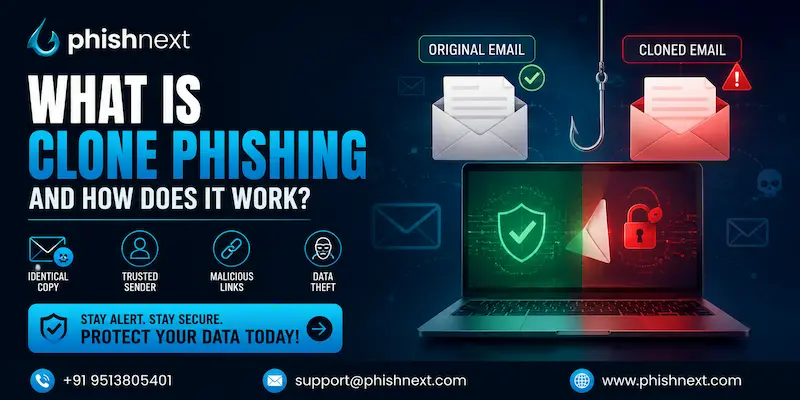
3. Clone Phishing: Legitimate official emails that have already been sent but have been altered to include harmful links.
4. Smishing and Vishing (SMS & Voice Phishing): Attacks that take advantage of government personnel who work remotely by sending phony SMS messages or phone calls.
5. Watering Hole Attacks via Phishing: Enticing officials to browse hacked, commonly visited websites of government vendors in order to infect their devices.
Why Do Government Employees Need Regular Phishing Awareness Training?
Government employees need regular phishing awareness training for the following reasons:
● Hackers Target the Human Element: Workers are the easiest point of entry for attackers because they are the weakest security connection.
● Threat Tactics Evolve Rapidly: Staff members are guaranteed to be able to recognize new, extremely complex social engineering techniques through ongoing training.
● Protects Sensitive National Security Data: Well-trained staff members stop private citizen records and confidential governmental intelligence from leaking.
● Prevents Catastrophic Ransomware Shutdowns: Staff members' early discovery ensures the smooth operation of vital public utilities and civic services.
● Combats Sophisticated State-Sponsored Espionage: Defense personnel are regularly trained to combat elite, foreign government-backed cyber espionage.
Key Features of an Effective Government Phishing Awareness Program
|
S.No. |
Factors |
What? |
|
1. |
Role-Specific Simulation Training |
Creates fictitious attacks that are tailored to the particular everyday responsibilities of various departments, such as defense or finance. |
|
2. |
Continuous, Bite-Sized Learning |
Replaces lengthy, dull yearly seminars with regular, brief lessons throughout the year. |
|
3. |
Instant Feedback and Remediation |
When an employee unintentionally clicks on a test link, it offers prompt, useful guidance. |
|
4. |
Easy One-Click Reporting Tools |
Provide employees with an easy-to-use email button so they can inform the security team about any suspicious messages right away. |
|
5. |
Advanced Metrics and Risk Tracking |
Determines which departments require additional training by monitoring simulation click rates over time. |
Benefits of Phishing Awareness Training for Government Agencies
The following are the benefits of phishing awareness training for government agencies:
a) Builds a Human Firewall: Turns workers into a proactive defensive barrier that can recognize and stop social engineering techniques.
b) Secures Classified and Citizen Data: Directly stops illegal access to private citizen records and key national security intelligence.
c) Reduces Incident Response Costs: Reduces the number of real breaches, saving a substantial amount of money that would otherwise be used for disaster recovery.
d) Ensures Regulatory Compliance: Maintains government organizations in compliance with stringent federal data protection and cybersecurity regulations.
e) Maintains Public Trust: Ensures that citizens continue to have faith in public institutions by protecting the integrity of digital government services.
How to Choose the Best Phishing Awareness Training Provider for Government Agencies?
You can choose the best phishing awareness training provider for government agencies in the following ways:
1. FedRAMP or Local Security Certifications: To guarantee safe data handling, give preference to suppliers who adhere to stringent federal security compliance standards.
2. State-Sponsored Threat Simulations: Make sure the platform imitates sophisticated, nation-state spear-phishing techniques instead of merely spam.
3. On-Premise Deployment Options: For sensitive government networks, pick suppliers who offer air-gapped, extremely secure on-site hosting.
4. Strict Role-Based Tailoring: Choose a provider that adapts exam situations to high-target personnel's particular clearances.
5. Accessibility and Multi-Language Support: Make sure the program conforms with accessibility regulations (such as Section 508) so that all employees in the public sector can use it.
Why is PhishNext the Best Choice for Government Phishing Awareness Training?
|
S.No. |
Factors |
Why? |
|
1. |
Backed by Real-World VAPT Expertise |
Active penetration testers create simulations to imitate real, state-sponsored cyber espionage. |
|
2. |
Massive Multilingual Content Library (35+ Languages) |
Provides specialized training situations to easily secure a diversified workforce in the public sector. |
|
3. |
AI-Driven Risk Scoring and Smart Groups |
Employs intelligent automation to quickly classify high-risk workers and provide focused, remedial training. |
|
4. |
Just-in-Time Micro-Learning Triggers |
Immediately when an employee clicks a test link, automatically launch short, interactive educational information. |
|
5. |
Audit-Ready Executive Analytics and Reporting |
Produces thorough progress reports that are compliance-mapped and prepared for direct presentation to government auditors. |
How PhishNext Helps Government Agencies Reduce Human Cyber Risks?
PhishNext helps government agencies reduce human cyber risks in the following ways:
● Simulates Advanced Nation-State Attacks: Launches realistic, extremely complex spear-phishing and whaling simulations to assess defenses.
● Automates Targeted Remediation via AI: Identifies employees who are at risk and automatically distributes customized training materials to those who require them most.
● Delivers Immediate Course Correction: Maximizes retention and quickly corrects dangerous behavior by educating users at the precise moment of an error.
● Streamlines Incident Reporting: Gives staff members the ability to quickly identify and report real dangers to security professionals.
● Simplifies Compliance Audits: Monitors employee development using comprehensive, audit-ready data that demonstrates adherence to stringent legal requirements.
Best Practices for Building a Phishing-Resistant Government Workforce
The following are the best practices for building a phishing-resistant government workforce:
a) Implement Zero-Trust and Phishing-Resistant MFA: To prevent access using stolen credentials, enforce stringent identity verification and FIDO2-based hardware keys.
b) Deploy High-Fidelity, Role-Based Simulations: Employees are tested using extremely realistic scenarios tailored to their particular departmental responsibilities.
c) Incentivize Reporting Over Punishing Mistakes: Instead of punishing employees who fail tests, give rewards to those who report suspicious activity.
d) Integrate Immediate, Just-in-Time Micro-Learning: Instruct staff members in quick, bite-sized lessons as soon as they make a mistake.
e) Enforce Strict External Vendor and Supply-Chain Protocols: All third-party contractors and partners should be subject to stringent verification requirements and phishing defenses.
Future Trends in Phishing Awareness Training for the Public Sector
|
S.No. |
Trends |
What? |
|
1. |
Generative AI Defense and Deepfake Training |
Teaches staff members how to spot highly polished AI-generated text, deepfake movies, and synthetic voice clones. |
|
2. |
Hyper-Personalized, Dynamic Simulation Engines |
Utilize automated technologies to rapidly customize bait emails according to the real-time behavioral footprint of an employee. |
|
3. |
In-the-Moment Inbox Coaching (Nudge Tech) |
When staff members scan their emails, relevant, real-time safety notifications are displayed right within the inbox. |
|
4. |
Gamification and Immersive Storytelling |
Role-playing security games and interactive, narrative-driven training missions can take the place of dull presentations. |
|
5. |
Shift to Human Risk Management (HRM) Metrics |
Measures real security behavioral changes and risk profiles rather than just click-rates. |
Conclusion: Strengthen Government Cybersecurity with PhishNext Phishing Awareness Training
Now that we have talked about the Best Phishing Awareness Training, you might want to get your hands on a dedicated way to learn how to evade phishing attacks. For that, you can go for PhishNext, a dedicated phishing simulator offered by Craw Security.
PhishNext can help users become aware of how a lot of phishing attacks happen and the ways to protect themselves against such attacks with ease. What are you waiting for? Contact, Now!
Frequently Asked Questions
About the Best Phishing Awareness Training
1. What is phishing awareness training for government agencies?
A specific cybersecurity program called phishing awareness training for government organizations teaches public sector workers how to spot, report, and defend against dishonest social engineering assaults that target sensitive national information.
2. Why are government agencies frequently targeted by phishing attacks?
Government agencies are frequently targeted by phishing attacks for the following reasons:
a) Access to Sensitive National Data,
b) Geopolitical and State-Sponsored Espionage,
c) High Ransomware Payoff Potential,
d) Legacy IT Infrastructure, and
e) Massive, Diverse Supply Chain.
3. How does phishing awareness training improve government cybersecurity?
Phishing awareness training can improve government cybersecurity in the following ways:
a) Builds a Proactive Human Firewall,
b) Accelerates Threat Detection and Reporting,
c) Protects Critical National Data,
d) Reduces Ransomware and Malware Infiltration, and
e) Ensures Continuous Regulatory Compliance.
4. What topics should be included in a government phishing awareness training program?
The following topics should be included in a government phishing awareness training program:
a) Spotting Advanced Spear-Phishing and Whaling,
b) Recognizing Deepfakes and AI-Generated Attacks,
c) Secure Handling of Classified and Citizen Data,
d) Malicious Link and Attachment Identification, and
e) Standard Operating Procedures for Incident Reporting.
5. How often should government employees complete phishing awareness training?
Instead of relying on a single yearly session, government employees should complete phishing awareness training on a continual, monthly basis, accompanied by prompt corrective training anytime they fail a simulation.
6. What is a phishing simulation, and why is it important for government organizations?
A phishing simulation is a controlled, simulated cyberattack that uses realistic-looking phony lures to test public employees' susceptibility and teach them to report real threats before a true breach happens.
7. How can government agencies measure the effectiveness of phishing awareness training?
Government agencies can measure the effectiveness of phishing awareness training in the following ways:
a) Simulation Phish-Prone Percentage (Click Rate),
b) Reporting Frequency and Accuracy (Reporting Rate),
c) Mean Time to Detect and Report (MTTR),
d) Repeat Offender Rates, and
e) Real-World Incident Reduction.
8. Why should government agencies choose PhishNext for phishing awareness training?
Government agencies can choose PhishNext for phishing awareness training for the following reasons:
a) Backed by Elite Offensive Security Expertise,
b) Powered by Live Threat Intelligence (ThreatFusionAI),
c) AI-Driven Personalization and Smart Groups,
d) Massive, Localized Multilingual Content Library, and
e) Audit-Ready Analytics for Regulatory Compliance.
9. Can phishing awareness training help government agencies meet cybersecurity compliance requirements?
Yes, by meeting statutory cybersecurity frameworks (such as FISMA, NIST SP 800-53, and ISO 27001) that specifically call for frequent user security training, phishing awareness training aids government organizations in meeting compliance standards.
10. What are the key benefits of implementing continuous phishing awareness training for government employees?
The following are the key benefits of implementing continuous phishing awareness training for government employees:
a) Eliminates the "Forgetting Curve",
b) Adapts Fast to Emerging AI and Deepfake Threats,
c) Cultivates a Constant Security-First Culture,
d) Provides Real-Time Risk Data for Leadership, and
e) Reduces Remediation and Downtime Costs.