AI Scams Explained: How Fraudsters Use 10 Powerful Tools to Attack?
Do you know what AI Scams are and how they can endanger your working environment by various means? If not, then you are at the right place. Here, we will talk about AI Scams in detail, with the solution you need to prevent them.
Moreover, we will introduce you to a reliable phishing simulation platform offered by a reputable VAPT service provider. What are we waiting for? Let’s get started!
What is Fraud‑as‑a‑Service?
Fraud-as-a-Service (FaaS) is a criminal business model that involves the commoditization of advanced cyberattack tools, infrastructure, and knowledge, which are then sold or leased as subscription-based services on the dark web.
Because this paradigm eliminates technical obstacles, even non-technical criminals can easily conduct sophisticated campaigns like malware attacks, AI-driven phishing, and the fabrication of synthetic identities.
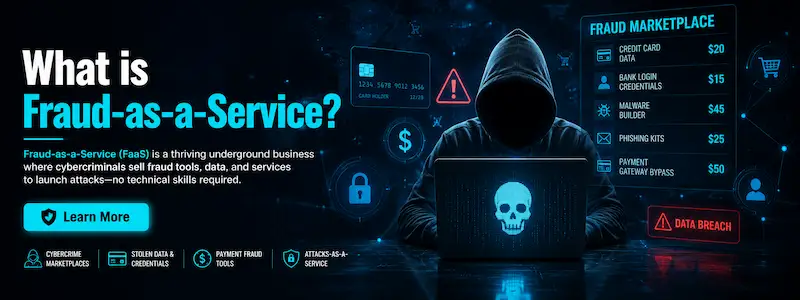
Through the industrialization of cybercrime, FaaS allows criminal actors to quickly expand their operations while hiding behind professionalized, outsourced criminal support networks. Let’s take a look at what AI Scams are and how they work!
The Mechanics of Modern AI Scams
|
S.No. |
Factors |
What? |
|
1. |
Hyper-Personalized Phishing |
AI creates incredibly persuasive, context-aware communications that take advantage of certain human psychological triggers by analyzing enormous datasets of personal activities. |
|
2. |
Deepfake Impersonation |
In order to get beyond voice-verification security and trick targets into approving fraudulent transfers, generative models produce real-time audio and video clones of reliable people. |
|
3. |
Autonomous Scam Orchestration |
In order to optimize conversion rates, AI agents oversee complete fraud campaigns by dynamically modifying scripts and strategies in response to the target's reactions. |
|
4. |
Visual and Document Forgery |
To trick automatic identity verification systems, sophisticated synthesis tools create nearly flawless, high-resolution fake papers, including IDs, bank statements, and utility bills. |
|
5. |
Automated Bot "Velocity" Attacks |
In order to overload fraud detection triggers and capture revenue before defenses can respond, bot networks carry out thousands of concurrent, AI-enhanced interactions across platforms. |
Top 10 Powerful AI Scam Tools In 2026

The following are the Top 10 powerful AI Scam Tools
- WormGPT: WormGPT is an unregulated AI-powered generative model created especially for cybercriminals to automate destructive operations like creating malware code and crafting complex phishing emails.
It functions as a potent tool for expanding illicit activities and decreasing the technological barrier for launching cyberattacks by removing the safety precautions present in commercial AI solutions.
● Features of WormGPT:
a) Complete Removal of Safety Guardrails,
b) Specialized Malicious Training Data,
c) Advanced Social Engineering Capabilities,
d) Code and Exploit Generation, and
e) Scalability and Automation.
● Prevention from WormGPT:
a) Strengthen Security Fundamentals,
b) Implement Continuous Monitoring,
c) Automate Patch Management,
d) Integrate Real-Time Threat Intelligence, and
e) Enhance Human Awareness Training.
- Business Invoice Swapper: Business Invoice Swapping, often referred to as Invoice Switching or Mandate Fraud, is a deceptive scheme where a fraudster impersonates a legitimate supplier, typically via email, to manipulate a business into updating its payment records with fraudulent bank account details.
Because the victim willingly approves a payment, thinking they are paying off a legitimate debt, only to have the money transferred to the criminal's account, the scam is very successful.
● Features of Business Invoice Swapper:
a) Impersonation and Reconnaissance,
b) Sense of Urgency,
c) Subtle Data Manipulation,
d) Exploitation of Trust, and
e) Delayed Discovery.
● Prevention from Business Invoice Swapper:
a) Mandatory Out-of-Band Verification,
b) Implement Multi-Way Matching,
c) Enforce Segregation of Duties,
d) Secure Vendor Onboarding, and
e) Employee Awareness Training.
- Hacked open‑source projects (SET & GoPhish): Because they act as "force multipliers" for attackers, hacked open-source programs like GoPhish and the Social Engineering Toolkit (SET) pose a serious security concern.
Threat actors can automate and scale complex phishing attacks with little technical work when these tools are compromised or malicious versions are disseminated (CISA, 2023).
● Features of Hacked open‑source projects (SET & GoPhish):
a) Backdoored Functionality,
b) Search Engine Poisoning,
c) Automated Execution,
d) Evasion of Security Controls, and
e) Erosion of Trust.
● Prevention from Hacked open‑source projects (SET & GoPhish):
a) Verify Source Integrity,
b) Perform Dependency Auditing,
c) Run Tools in Isolated Environments,
d) Monitor for Anomalous Activity, and
e) Practice "Least Privilege".
- FraudGPT, DarkBard, and DarkWizardAI: These technologies are part of the "Dark AI" ecosystem, which consists of uncensored, subscription-based large language models (LLMs) designed to scale and commercialize criminality.
These platforms, in contrast to conventional AI, have all safety and ethical safeguards removed, enabling them to produce dangerous content on their own.
● Features of FraudGPT, DarkBard, and DarkWizardAI:
a) "All-in-One" Criminal Kits,
b) Contextual Adaptation,
c) Localized Multilingual Support,
d) Automated Social Engineering, and
e) Continuous Threat Development.
● Prevention from FraudGPT, DarkBard, and DarkWizardAI:
a) Implement AI-Aware Email Security,
b) Adopt Zero-Trust Access,
c) Deploy Endpoint Detection and Response (EDR),
d) Proactive Data Loss Prevention (DLP), and
e) Establish Rapid Verification Protocols.
- Morris II Worm: A groundbreaking proof-of-concept for the GenAI era, the Morris II worm shows how "adversarial self-replicating prompts" can take control of networked AI agents, such as email assistants, to steal data and propagate on their own without human assistance.
It basically turns the AI's own helpfulness into a means for infection by forcing infected systems to resend harmful payloads in each successive response by influencing the semantic understanding of LLMs.
● Features of Morris II Worm:
a) Adversarial Self-Replication,
b) Zero-Click Infiltration,
c) Payload Versatility,
d) Evasion of Legacy Security, and
e) Ecosystem Propagation.
● Prevention from Morris II Worm:
a) Implement "Human-in-the-Loop" Controls,
b) Secure RAG Architectures,
c) Enforce Strict API Governance,
d) Deploy Behavioral Monitoring, and
e) Proactive "Red Teaming".
- ViKing: The "ViKing" tool is a powerful, relatively new phishing kit that has surfaced on the black market. It is specifically designed to evade multi-factor authentication (MFA) and obtain session tokens instantly.
ViKing functions as a "man-in-the-middle" proxy, enabling attackers to intercept security codes and session cookies as they are entered by the victim, in contrast to simple phishing pages that merely steal static usernames and passwords.
● Features of ViKing:
a) Real-Time Proxy Engine,
b) Session Token Theft,
c) Device Fingerprint Mimicry,
d) Targeted UI/UX Customization, and
e) Automated Redirection.
● Prevention from ViKing:
a) Adopt Phishing-Resistant MFA,
b) Implement Conditional Access Policies,
c) Use Browser-Based Security Tools,
d) Continuous Token Lifecycle Management, and
e) Proactive Domain Monitoring.
- OnlyFake: "OnlyFake" was an underground service that mass-produced extremely convincing, AI-generated phony identification documents, such as driver's licenses and passports, using a combination of neural networks and document templates.
The website made it possible for criminals to get around automatic "Know Your Customer" (KYC) verification systems used by financial institutions and cryptocurrency exchanges by letting users alter data and create images that looked like photos shot on actual surfaces (such as tables or carpets).
● Features of OnlyFake:
a) Template-Driven Generation,
b) Environmental Realism,
c) Batch Production,
d) Accessibility and Scale, and
e) Bypassing KYC Anchors.
● Prevention from OnlyFake:
a) Advanced Document Forensics,
b) Orchestrated Risk-Based Verification,
c) Biometric Binding,
d) Cross-Platform Anomaly Detection, and
e) Multi-Layered "Anchoring".
- Fraud starter kits: On the dark web, fraud starter kits are "all-in-one" packages that give would-be hackers the pre-made templates, scripts, and guidelines they need to start sophisticated phishing or financial fraud campaigns without requiring technical know-how.
● Features of Fraud starter kits:
a) Turnkey Infrastructure,
b) Low Technical Barrier,
c) Integrated Evasion Tools,
d) Automated Data Exfiltration, and
e) Scalability.
● Prevention from Fraud starter kits:
a) Employ Advanced Email Filtering,
b) Mandate Phishing-Resistant MFA,
c) Monitor Brand and Domain Usage,
d) Implement Strong Endpoint Security, and
e) Prioritize Employee Awareness.
- Remcos in Excel: A potent Remote Access Trojan (RAT) called Remcos (Remote Control and Surveillance) is commonly disseminated using infected Microsoft Excel files. The file runs obfuscated scripts that download and install the malware once a user is duped into opening it and turning on macros. This gives attackers complete, unapproved control over the victim's computer.
● Features of Remcos in Excel:
a) Macro-Based Infection,
b) Fileless Delivery,
c) Obfuscation and Anti-Analysis,
d) Full-System Takeover, and
e) Deceptive Lures.
● Prevention from Remcos in Excel:
a) Block Macros by Default,
b) Disable Legacy XLM Macros,
c) Enforce Patch Management,
d) Implement Behavioral Monitoring, and
e) Strict Email Filtering.
- Deep-Live-Cam: Real-time deepfake face switching during live video chats is made possible by the open-source, AI-powered Deep-Live-Cam software. Although it was first created for research and amusement, its high-fidelity output and ease of use have made it a popular tool for hackers to appear as reliable people during video conferences.
● Features of Deep-Live-Cam:
a) Real-Time Synthesis,
b) Open-Source Accessibility,
c) Bypassing Video Verification,
d) Low Latency Performance, and
e) High-Fidelity Mimicry.
● Prevention from Deep-Live-Cam:
a) Adopt "Verification-Before-Execution" Protocols,
b) Utilize AI-Detection Tools,
c) Mandate Use of Secure Collaboration Platforms,
d) Implement "Zero Trust" Visuals, and
e) Endpoint Protection.
- PersonaForge: In the cybersecurity and fraud prevention sector, a class of AI-powered tools that automate the bulk generation of synthetic identities is referred to as "PersonaForge."
During the "Know Your Customer" (KYC) onboarding process, these tools can create consistent, realistic digital footprints, such as email addresses, social media profiles, and fake activity logs, by utilizing generative models. This allows fraudulent personas to look identical to actual customers.
● Features of PersonaForge:
a) Persona Consistency,
b) "Nurturing" Automation,
c) Digital Footprint Synthesis,
d) Scalability for Fraud Rings, and
e) Dynamic Adaptation.
● Prevention from PersonaForge:
a) Behavioral Biometrics,
b) Device and Network Link Analysis,
c) "Liveness" Testing,
d) Contextual Risk Scoring, and
e) Threat Intelligence Integration.
- Agent Tesla (and variants): Agent Tesla is a well-known, adaptable Remote Access Trojan (RAT) that is marketed as malware-as-a-service and specializes in stealing private data from compromised Windows systems, including login passwords, keystrokes, and clipboard data.
It is mostly distributed through sophisticated spear-phishing attacks that frequently pose as business papers or bills. It is renowned for its capacity to constantly improve its evasion strategies in order to get around security measures that rely on signatures.
● Features of Agent Tesla (and variants):
a) Comprehensive Data Theft,
b) Multi-Stage Evasion,
c) Process Injection,
d) Flexible Exfiltration, and
e) Persistent Persistence.
● Prevention from Agent Tesla (and variants):
a) Enforce Macro Policies,
b) Implement Phishing-Resistant MFA,
c) Apply Behavioral Monitoring (EDR),
d) Adopt the Principle of Least Privilege, and
e) Network Segmentation and Filtering.
Warning Signs and Behavioral Red Flags
The following are some warning signs and red flags:
● Unexplained Urgency: Threats of dire repercussions or demands for quick action are used to circumvent critical thought and compel quick, unconfirmed acquiescence.
● Request for "Out-of-Channel" Communication: In order to evade internal monitoring and accountability, attackers shift discussions to encrypted apps or private platforms.
● Deviations from Standard Procedures: Bypass efforts can be identified by requests to disregard established verification, approval, or documentation procedures.
● Linguistic and Contextual Anomalies: Generative AI frequently generates excessively formal, robotic, or slightly "off" language that doesn't fit the sender's established professional tone.
● Persistent "Impossible" Requests: Malicious intent is suggested by persistent attempts to push boundaries, such as requesting sensitive data access or financial overrides in spite of obvious policy rejections.
How to stop AI Scam Tools before they scale?
|
S.No. |
Factors |
How? |
|
1. |
Deploy Real-Time Behavioral Analytics |
To quickly spot and stop abnormalities typical of automated AI attack scripts, keep an eye on user and network trends. |
|
2. |
Enforce Out-of-Band Verification |
Before handling any high-risk modifications or requests, obtain secondary confirmation through a reliable, independent communication channel. |
|
3. |
Adopt Phishing-Resistant Identity Layers |
To cryptographically secure user logins against interception, replace susceptible SMS/push codes with FIDO2 hardware keys. |
|
4. |
Implement Adaptive Risk-Based Scoring |
Security checks can be automatically escalated based on real-time variables such as session patterns, login location, and device reputation. |
|
5. |
Automate Threat Intelligence Integration |
Provide defenses with real-time global attack data so they may proactively stop malicious infrastructure and known AI tool signatures. |
Future Trends: The Arms Race Between AI Fraud and Detection
Static, rule-based systems are giving way to dynamic, real-time combat in the arms race between AI fraud and detection, where both attackers and defenders use autonomous, agentic AI to obtain a decisive speed advantage.
Organizations are counter-deploying federated behavioral analytics and adaptive machine learning to neutralize these threats before they can evade conventional security controls, while criminals use generative models to produce hyper-personalized, industrial-scale deception.
Conclusion
Now that we have talked about what AI Scams are, you might want to get a customized solution for protecting yourself against such scams. Such scams also fall under the category of phishing scams.
For that, you can go for Phish Next, a dedicated phishing simulation platform offered by Craw Security. This platform can offer various opportunities to confront phishing attack simulations, so that the practitioner can evade such situations in the future. What are you waiting for? Contact,